
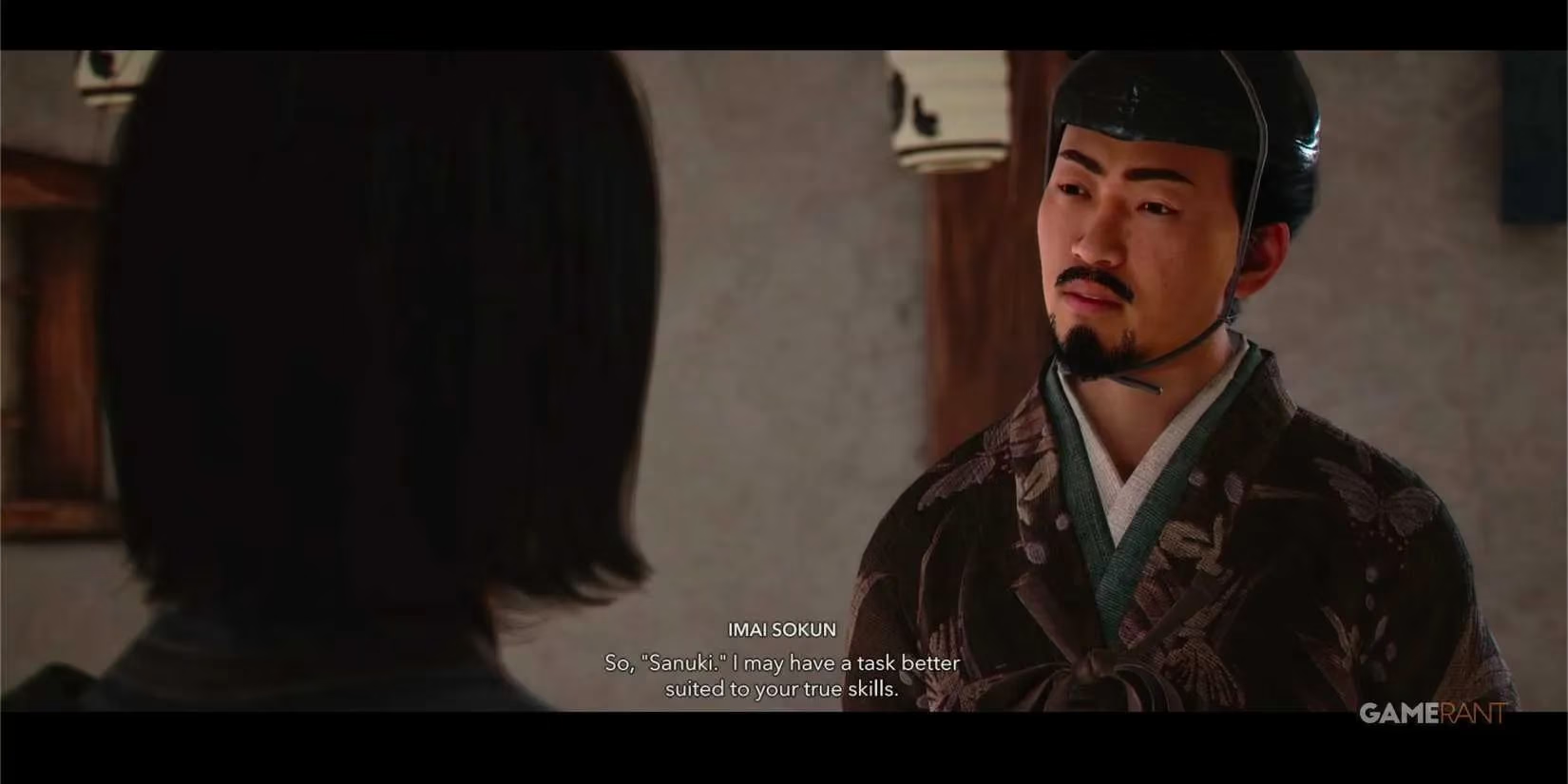
The humid air of Sakai clung to Naoe like a second skin as she slipped through the firearms district. The scent of gunpowder and brine mixed with the distant clang of smiths shaping metal. It was there, in the quiet shop of Imai Sokun, that a peculiar request would unravel into a web of moral dilemmas—a tapestry where every thread was a life to be taken or spared.
Sokun, a man whose hands had once wielded weapons but now rested on a ledger, entreated Naoe and Yasuke with a weighted plea. "The Iron Hand Guild," he whispered, "they've strangled our trade. But not all of them are viper-hearted. Some merchants were coerced. I ask you, as a favor between old allies, to judge carefully." His eyes, twin embers of desperation, reflected a hope that the assassins would become arbiters of mercy rather than merely blades in the dark.
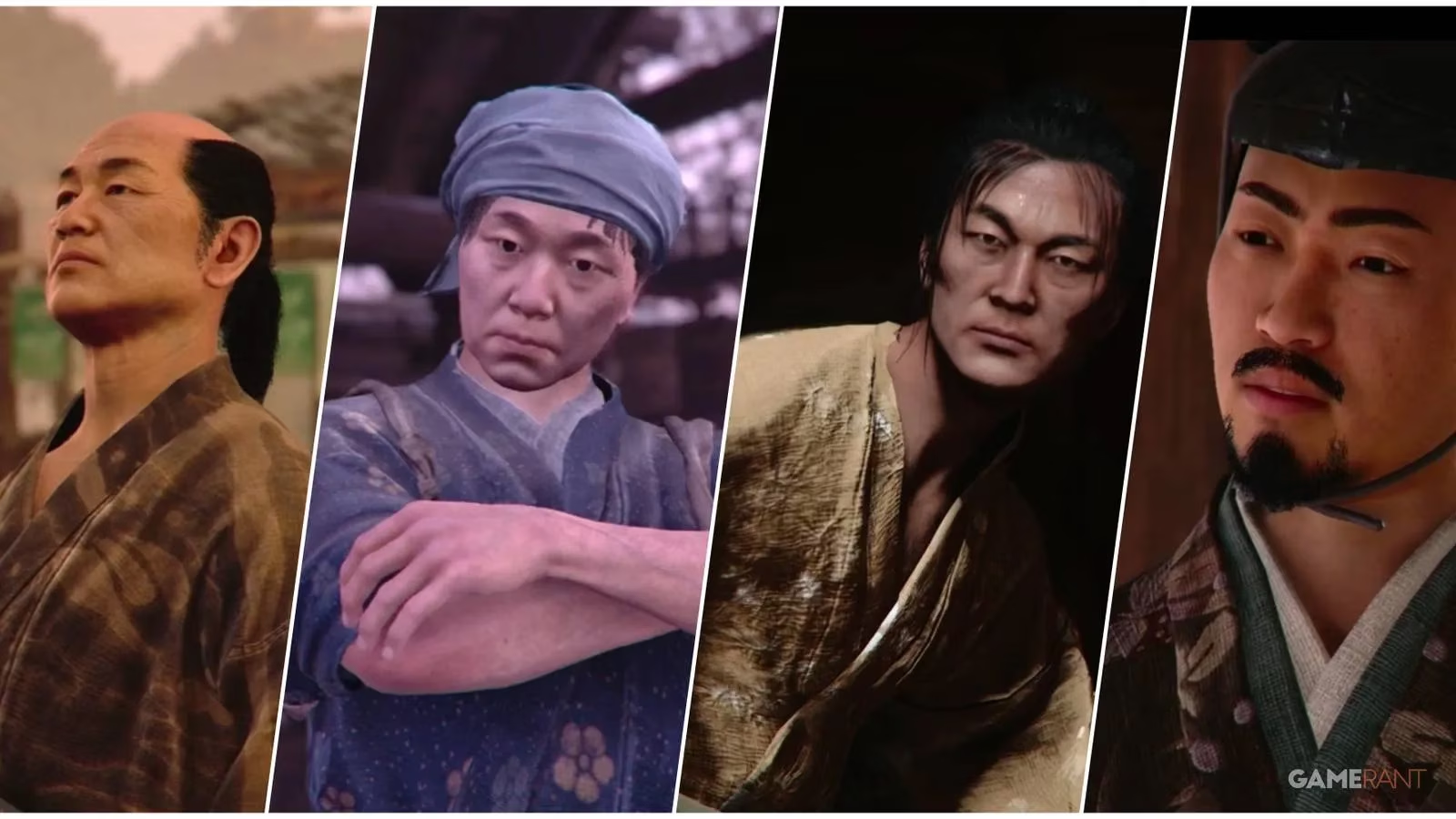
The commission unfolded like a parchment map dotted with red ink. A list of seven names, each a merchant or enforcer, was thrust into their hands. The quest was not designed for a single, brute-force sweep. Instead, it was a slow-burn investigation, spanning regions that stretched from Settsu to the misty shores of Lake Biwa. Naoe learned early that some targets were nestled in territories far beyond her current prowess. One such merchant, Hideo of the Silver Scales, lurked in a fortress-patrolled valley where enemy samurai prowled like steel-plated wolves. The game’s level recommendation—a subtle whisper of "35"—hung over the final confrontation like a guillotine blade.
The task became a dance of shadows and discernment. Each merchant had a story, and Sokun’s intel hinted at which were truly corrupt and which were mere puppets. The assassins had to dig deeper, eavesdropping on conversations in dim sake houses, tailing suspects through crowded markets, and reading hidden missives. Here was where the gameplay grew into a metaphor: it was like sculpting a bonsai from a wild shrub, carefully snipping away the diseased branches (the guilty) while training the healthy ones (the redeemable) to grow free. One misstep, one rash kill, and the delicate balance Sokun sought would collapse.
The hunt for Merchant Kanta proved particularly enigmatic. Sokun’s log led them to a "Missing Ship" rumor. Naoe found herself hiking the southern island of Lake Biwa, where the sunset painted the water in hues of bruised plum. At the southwestern tip of Okishima Island, wreckage jutted from the coast like the ribs of a beached leviathan. A letter, clutched in the grip of a drowned sailor’s skeleton, revealed Kanta’s hidden warehouse. This clue-chase was a microcosm of the quest’s design: a breadcrumb trail that rewarded patience over fury.
As Naoe and Yasuke whittled down the list, they faced a critical choice before each final blow. In many games, side quests are binary—kill or don’t kill. But here, the narrative demanded a third layer: justification. Was the merchant truly guilty? The game never spelled it out completely; instead, it relied on environmental storytelling and scattered documents. It felt less like a checklist and more like untying a complex knot without breaking the rope. Each spared target returned to Sokun’s network, strengthening his legitimate trade, while the executed ones left a vacuum that honest merchants quickly filled.
The climactic boss, a towering brute known as The Iron Hand himself, awaited in a fortified dock warehouse. By then, Naoe had honed her skills to near-perfection. The battle was no genteel duel; it was a thunderstorm of steel and gunpowder. The boss swung a massive anchor chain as if it were a ribbon, forcing the assassins to dance between death’s fingers. His suggested level of 35 proved accurate; attempted earlier, he would have crushed them like ants beneath a millstone. When the final blow landed and the titan fell, the silence that followed was thick with relief.
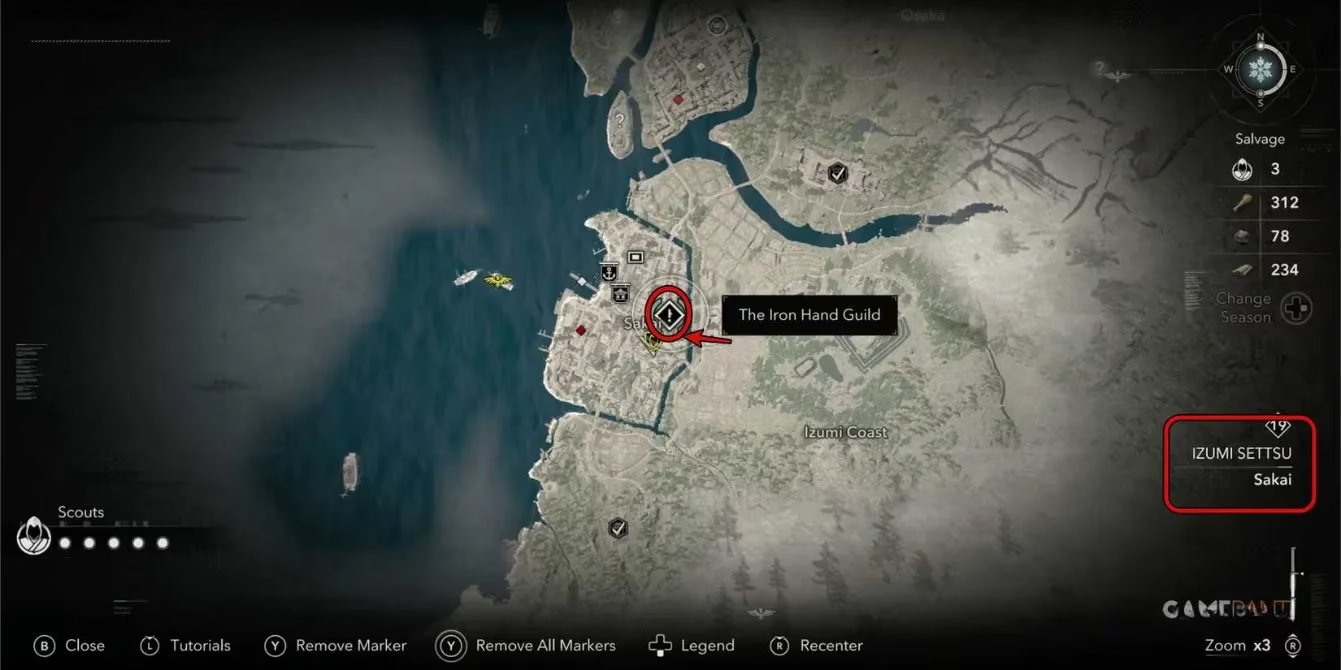
Returning to Imai Sokun brought a quiet resolution. The rewards—Fujin's Tempest, a legendary trinket that pulsed with storm magic; a single gold piece; and a surge of experience—seemed almost secondary to the story’s closure. Sokun’s gratitude was palpable. "You did more than hunt," he said. "You curated a better future for Sakai." The 5500 XP felt like a tangible measure of the hard-won wisdom, not just the bloodshed.
In the end, "The Iron Hand Guild" stood as a testament to Assassin's Creed Shadows' ambition to infuse moral complexity into its open-world tapestry. It was not merely a task to be completed, but a story to be navigated with a sharp mind and a tempered heart. For those who sought to rush, it would be a tedious grind. But for players who approached it as a philosopher’s blade—cutting only what was truly rotten—it became one of the most memorable threads in the game’s rich weave.