
Let me tell you, as a lifelong aficionado of virtual worlds and ancient blades, the year 2026 has been a paradise for those of us who have dreamed of exploring feudal Japan. I have plunged headfirst into the swirling chaos of Assassin's Creed Shadows and walked the windswept, tragic path of Ghost of Tsushima. To call this a mere comparison would be a disservice; it's a monumental, earth-shattering clash of philosophies, a battle for the very soul of the open-world ninja fantasy. While Ubisoft finally delivered the Japan-set Assassin's Creed we've been screaming for, Sucker Punch's masterpiece from years ago still casts an impossibly long, hauntingly beautiful shadow. My journey through these two titans has left me breathless, conflicted, and utterly obsessed.
🥷 The Art of Unseen Death: Stealth Supremecy
Oh, the sweet, silent thrill of the stalk! If there's one area where Assassin's Creed Shadows ascends to god-tier status, it's the art of stealth. Playing as Naoe is an absolute revelation. Her toolkit is so gloriously varied and transformative that I felt like a phantom deity weaving through the shadows. The parkour? Divine! Thanks to a world designed with breathtaking verticality, I was scaling pagodas, leaping across rooftops, and diving from impossible heights into haystacks with a fluidity that made my heart sing.
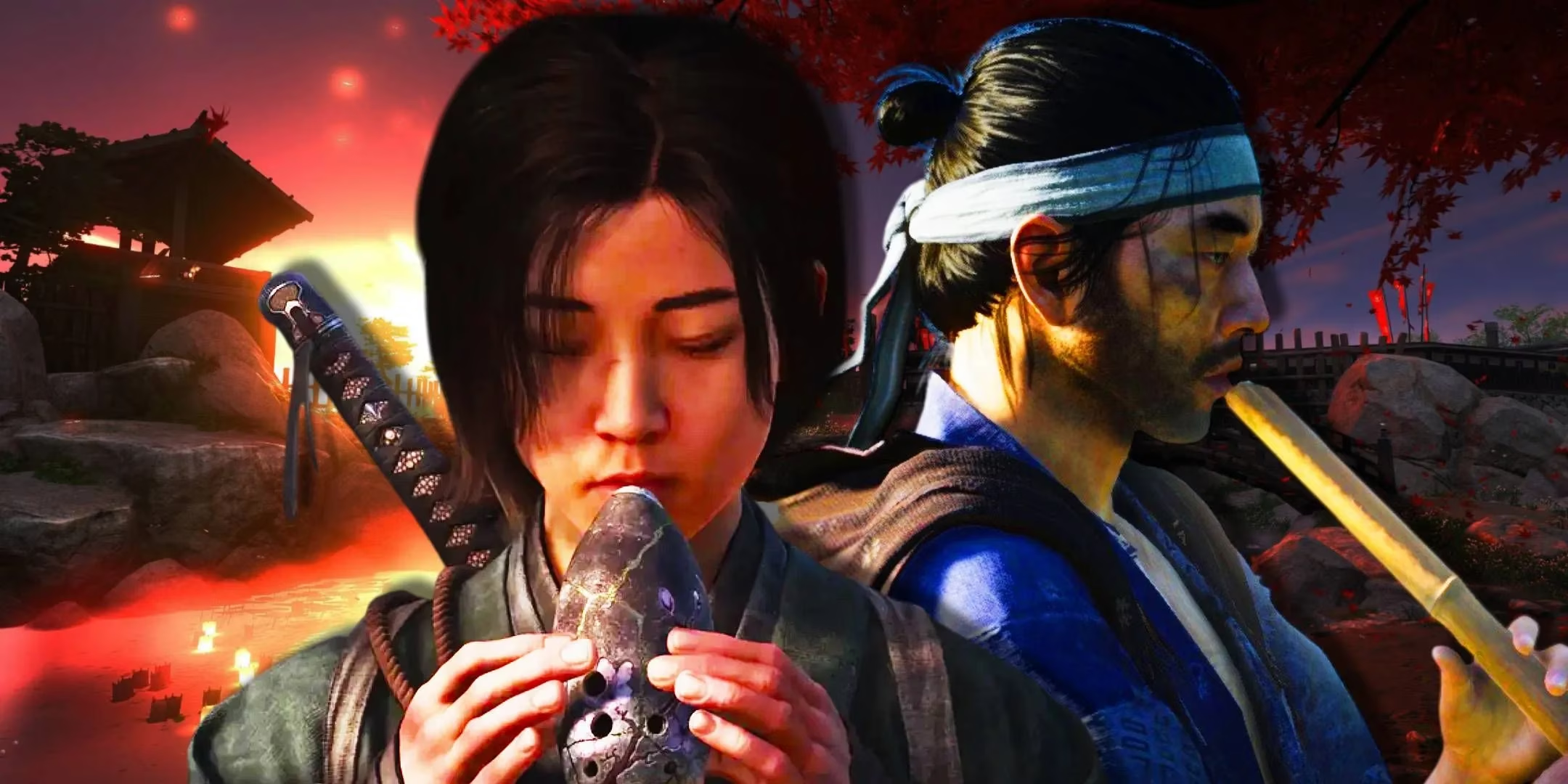
On the hardest difficulty, every mission became a pulse-pounding symphony of tension. Getting spotted wasn't a minor inconvenience; it was a catastrophic failure that sent a jolt of pure adrenaline through my system. This gave every silent takedown profound meaning and purpose. Conversely, while I adore Jin Sakai, the stealth in Ghost of Tsushima always felt like a supporting act to its majestic combat—a useful tool, yes, but one that lacked the deep, strategic exhilaration and sheer fun factor that Shadows delivers in spades.
⚔️ The Dance of Blades: Combat Clash
Now, let's talk about the clash of steel, the spray of virtual blood, the thing that gets your pulse racing! Here, my friends, Ghost of Tsushima is untouchable, a masterpiece of cinematic violence. Every swing of Jin's katana has a devastating, weighty impact that feels ripped from a Kurosawa film. The animations are so clean, so stylish, so lethally beautiful that combat becomes a deadly ballet. The sense of progression, unlocking new stances to shatter different enemy defenses, is impactful and deeply satisfying.
Assassin's Creed Shadows combat is by no means bad—in a vacuum, it's a robust and enjoyable system. But placed next to Ghost's perfection, it feels inconsistent and occasionally clunky. The lock-on can be fickle, the animations lack that final polish of deadly elegance, and it never quite achieves the same visceral, cinematic flair. Ghost's combat isn't just about substance; it's about soul-stirring style that makes you feel like a legendary warrior with every parry and slash.
🌸 A Living, Breathing World: Environment & Immersion
This is where the debate gets fascinating! Assassin's Creed Shadows boasts a map of staggering scale, but its true genius lies in its dynamism. The implementation of shifting seasons is nothing short of a technical and artistic marvel. I watched, utterly mesmerized, as vibrant, cicada-chirping summers melted into silent, snow-blanketed winters. This isn't just a visual trick; it mechanically alters gameplay, affecting visibility and traversal. The world teems with hundreds of unique NPC animations, creating a tapestry of life that feels breathtakingly real.
Ghost of Tsushima's island of Tsushima is a more focused, curated painting. Its landscapes are dramatic, its use of color is artistically bold and vibrant, and it often looks more aesthetically striking in static shots. However, its lack of a dynamic, evolving world makes it feel more static in comparison. While Shadows offers a sprawling, realistic simulation, Ghost offers a breathtaking, idealized work of art.
🧗♂️ The Shinobi's Path: Movement & Exploration
For years, I mourned the death of elegant parkour in Assassin's Creed. Shadows has resurrected it in glorious fashion! Scaling castles, running along walls, and navigating dense urban sprawl with Naoe is an absolute joy, a triumphant return to form that modernizes the classic feel. Compared to Jin's somewhat weighty and limited clambering in Ghost, the freedom of movement in Shadows is the clear, undisputed winner for delivering that authentic, nimble shinobi fantasy.
However, when it comes to the philosophy of exploration, Ghost of Tsushima taught everyone a lesson. By ditching ubiquitous map markers and using the wind, guiding birds, and foxes to lead the way, it created an unbelievably immersive experience. You felt connected to the world, not just chasing icons. Shadows, while using terrain cleverly to guide players, largely falls back on the familiar, less magical "map marker" approach. It's functional, but it lacks the poetic genius of Ghost's method.
📖 Tales of Honor and Assassination: Story & Characters
Here's the twist in our tale! For main narrative ambition and depth, Assassin's Creed Shadows takes the crown. The dual protagonist structure, following the legendary samurai Yasuke and the shinobi Naoe, weaves a complex, engaging tale that deftly ties into the larger Assassin's Creed lore. Their intertwined struggles within the turbulent Sengoku period offer far more narrative heft and variety.
Ghost of Tsushima's main story, while emotionally resonant, often feels conflicted, preaching stealth while glorifying combat, which can create a disconnect. Yet, where Ghost utterly triumphs is in its side content and supporting cast. Its side quests are meticulously curated, feeling just as important as the main journey, and its characters—from the fierce Yuna to the hilarious Kenji—are unforgettable. They form an emotional backbone that Shadows' more bloated cast of minor characters struggles to match, despite having a fantastic central hideout hub.
🏯 Scale vs. Intimacy: Urban Design
One of Shadows' most jaw-dropping achievements is its enormous, bustling cities. Places like Kyoto are monumental achievements in virtual world-building, packed with distinct districts, thousands of NPCs going about their lives, and towering castles begging for infiltration. They feel alive in a way few game worlds ever achieve.
Comparing Ghost here feels almost unfair, given its rural island setting. Its settlements and castles are beautifully crafted but smaller in scale, often blending together. Shadows offers the epic, lived-in urban experience, while Ghost provides a more intimate, naturalistic one.
🏆 The Final Verdict: A Duel Without a Loser
So, who wins this legendary duel? The answer, I've realized after countless hours in both, is us—the players.
-
Play Assassin's Creed Shadows if you crave: A massive, dynamic, and realistic feudal Japan simulator with god-tier stealth, excellent parkour, a deep dual-narrative, and breathtakingly large-scale urban exploration.
-
Play Ghost of Tsushima if you crave: A curated, visually stunning work of art with arguably the greatest third-person melee combat ever crafted, incredibly immersive exploration, unforgettable characters, and side stories that punch with the weight of the main tale.
Both are phenomenal achievements that honor the setting in their own magnificent ways. Shadows is the ultimate Assassin's Creed fantasy set in Japan, while Ghost of Tsushima remains a timeless, peerless samurai cinema experience. In 2026, we are blessed to have both these masterpieces to get lost in. The duel is eternal, and I am more than happy to keep fighting—and sneaking—on both sides.