
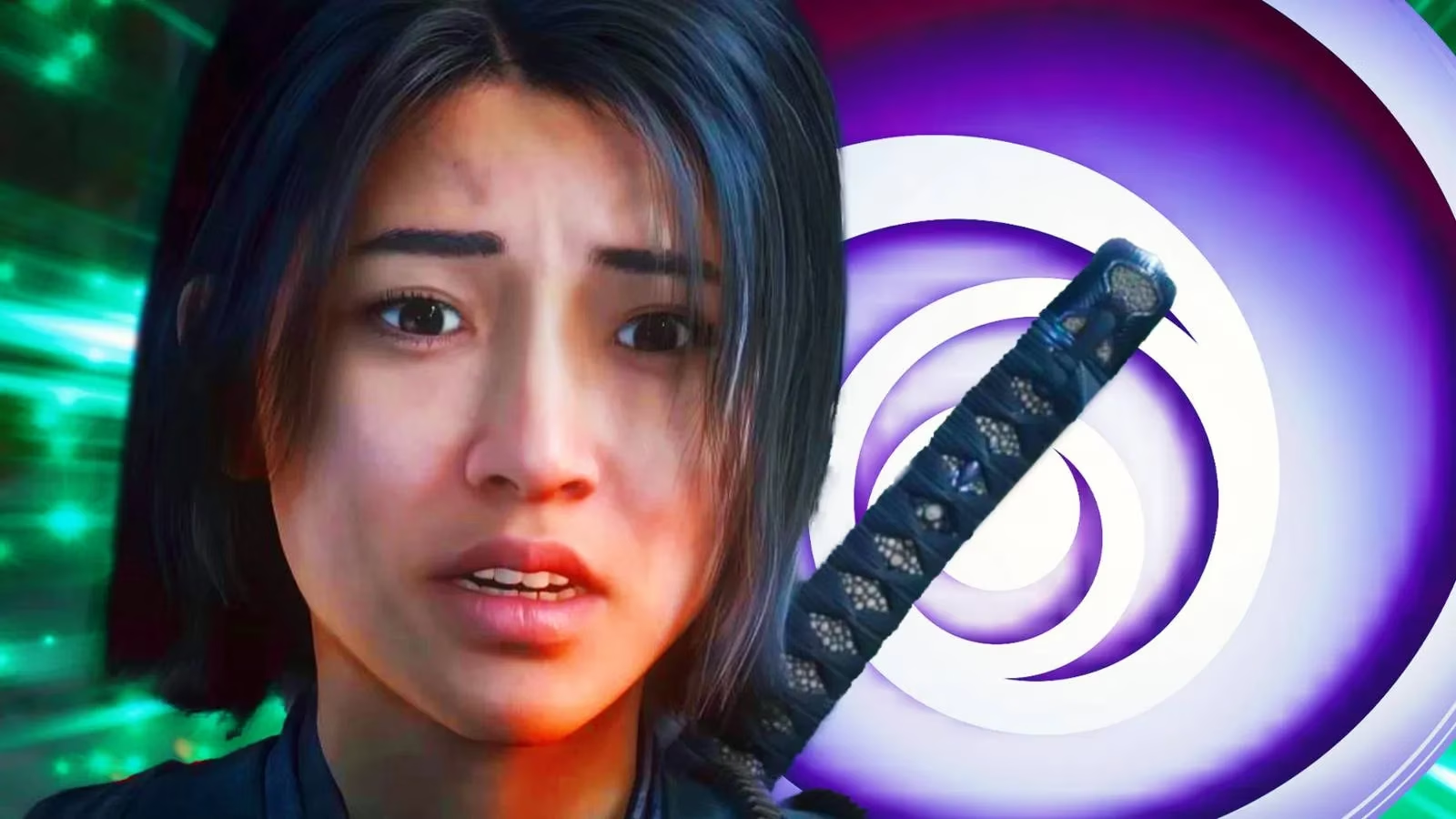
From a player’s perspective, the arrival of Assassin’s Creed Shadows felt like a long-awaited moment of relief for a publisher that has spent several years under a very dark cloud. The open-world stealth-action title arrived to strong critical buzz and immediately drew millions of players, giving Ubisoft its brightest commercial headline in ages. But once the launch-week excitement began to settle, a more difficult question emerged: can one blockbuster really pull a struggling company back from the edge? As 2026 gets underway, that question still doesn’t have a simple answer.
A Record-Breaking Launch by the Numbers
There’s no denying that Assassin’s Creed Shadows delivered a powerful opening. Industry reports noted that the game posted the second-highest Day 1 sales in the entire Assassin’s Creed franchise, trailing only Assassin’s Creed Valhalla. Ubisoft also confirmed on social media that the title passed two million players quickly, putting it ahead of earlier entries such as Assassin’s Creed Origins and Assassin’s Creed Odyssey during comparable windows.
That commercial momentum showed up in other ways too. Shadows became Ubisoft’s best-performing day-one launch on the PlayStation digital store, and it earned the spot of the publisher’s most wishlisted game of all time. For players watching from the outside, these numbers weren’t just marketing talk—they signaled that gamers were still deeply interested in the series, even after years of debates about formula fatigue.
| Performance signal | What it suggested |
|---|---|
| Second-highest Day 1 sales in franchise history | The series still has enormous commercial appeal |
| Two million players in the early period | Adoption outpaced Origins and Odyssey |
| Best PlayStation digital day one for Ubisoft | Digital storefront demand remains strong |
| Most wishlisted Ubisoft game ever | Long-running fan interest didn’t fade |
Why This Win Mattered So Much
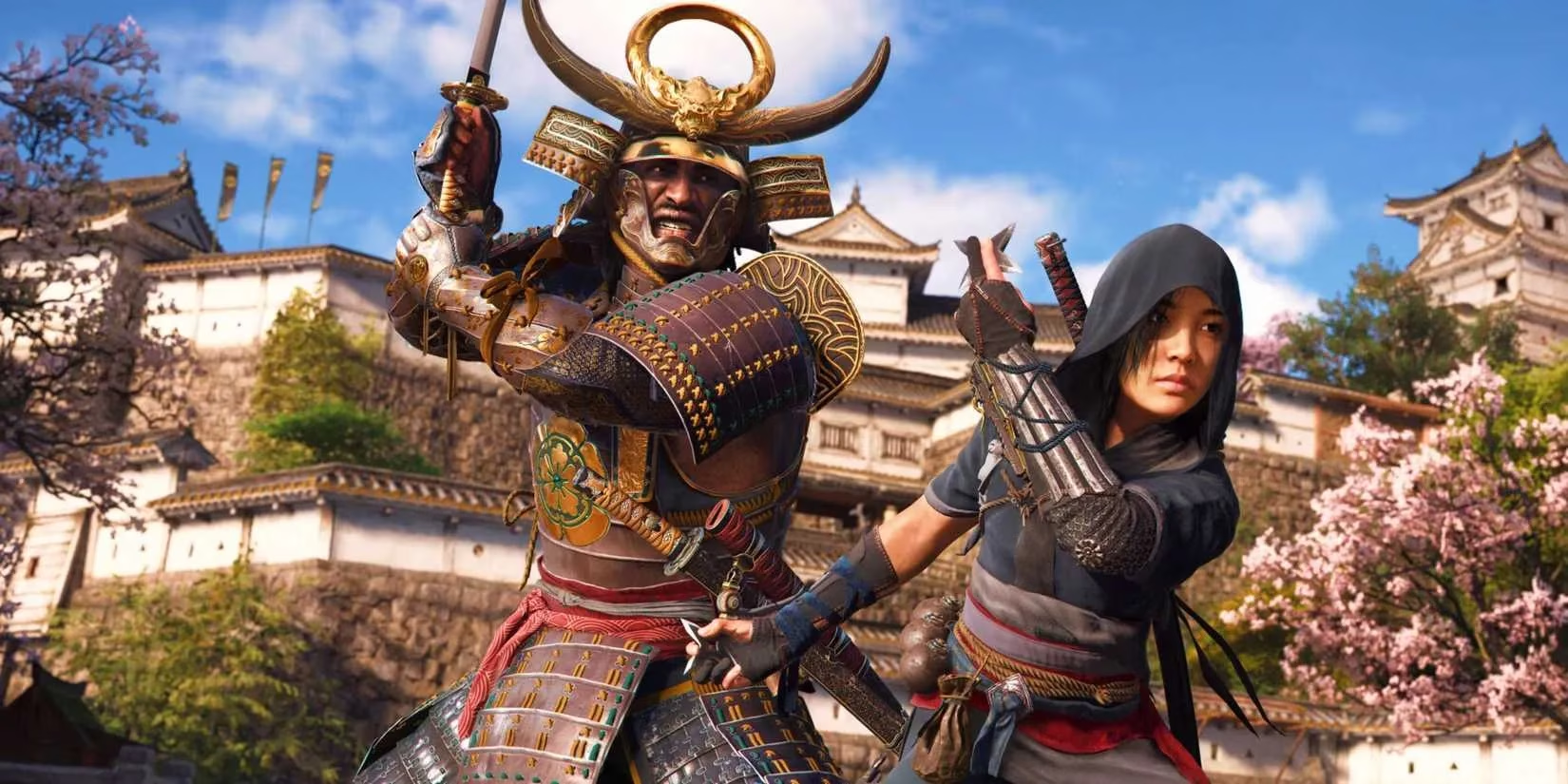
The success of Shadows wasn’t just a nice surprise—it was practically necessary. Ubisoft entered this release after a string of underwhelming performances from titles that were expected to carry the company. Prince of Persia: The Lost Crown received critical praise but didn’t meet sales expectations, while Skull and Bones had a notoriously difficult journey. Even major licensed projects like Avatar: Frontiers of Pandora and Star Wars Outlaws underperformed relative to the company’s hopes.
Against that backdrop, Shadows did something essential: it reminded players, investors, and perhaps Ubisoft itself that the publisher can still create the kind of mega-hit it built its reputation on. The Assassin’s Creed name clearly still holds weight, and Shadows turned that recognition into real commercial results.
The Crisis That One Hit Can’t Erase
Even with those strong numbers, it would be a stretch to call Shadows a full rescue. Ubisoft’s problems run much deeper than a weak release calendar. The company has faced layoffs and studio closures, including the shutdown of a United Kingdom studio that affected at least 185 employees. Meanwhile, reports from CNBC in October 2024 showed that Ubisoft shares had fallen to a decade low.
Those struggles have not only hurt morale and operations—they’ve also placed Ubisoft’s future under a microscope. Some investors have reportedly pushed for a sale of the company, and repeated financial losses mean that a single successful title can’t automatically restore confidence. Shadows may prove that the creative spark is still there, but it doesn’t erase the structural problems, cost pressures, and strategic uncertainty hanging over the publisher.
A Thin Roadmap and an Uncertain Future
For a comeback to truly take hold, a hit like Shadows needs to be followed by consistent, well-received releases. That’s where the picture gets shaky. When looking at the rest of 2025, Ubisoft’s lineup appeared noticeably thin, with Anno 117: Pax Romana standing out as the only major console and PC release. Several long-awaited projects, such as the Splinter Cell remake and Beyond Good & Evil 2, remained deep in development with little visibility on a launch window.
As 2026 continues, that slow pipeline remains a major concern. A publisher can use a blockbuster to rebuild momentum, but only if there are enough upcoming games to sustain it. Otherwise, the buzz around Shadows risks fading while players wait for the next major offering.
A Win, Not a Cure
Assassin’s Creed Shadows gave Ubisoft exactly what it needed in the short term: a commercially successful release, positive player attention, and a reminder that the company can still produce crowd-pleasing experiences. Yet the publisher’s larger battle is far from over. Underwhelming releases, internal restructuring, investor pressure, and a sparse near-term slate all point to a company that needs more than one hit to recover.
From a player’s perspective, Shadows feels like a hopeful signal—proof that Ubisoft can still deliver when it focuses its talent on a beloved franchise. But hope alone isn’t a turnaround strategy. The real test is whether Ubisoft can build on this victory with a cadence of strong games, because one successful assassin may win a battle, but the war for Ubisoft’s future is still very much undecided.
According to coverage from Eurogamer, blockbuster launches like Assassin’s Creed Shadows can generate impressive early momentum, but the more telling story is how publishers convert that spike into sustained stability. In Ubisoft’s case, strong day-one sales and rapid player adoption may buy time and confidence, yet the broader turnaround still depends on follow-up releases, long-tail engagement, and a clearer pipeline—because without consistent hits, even a record-setting Assassin’s Creed can become a single bright spot rather than the start of a durable recovery.