
As any seasoned gamer knows, a Ubisoft open world isn't just about the main quest; it's a sprawling canvas for the developers' mischievous sense of humor and pop-culture obsessions. The 2025 release of Assassin's Creed Shadows, set in feudal Japan, is no exception. While it forges its own path in the storied franchise, it's absolutely littered with delightful secrets, cheeky winks, and references that range from deep-cut anime lore to legendary gaming memes. For the eagle-eyed player, exploring the lush landscapes and bustling towns of 16th-century Japan becomes a treasure hunt for these hidden gems, each one a small reward for curiosity and exploration.
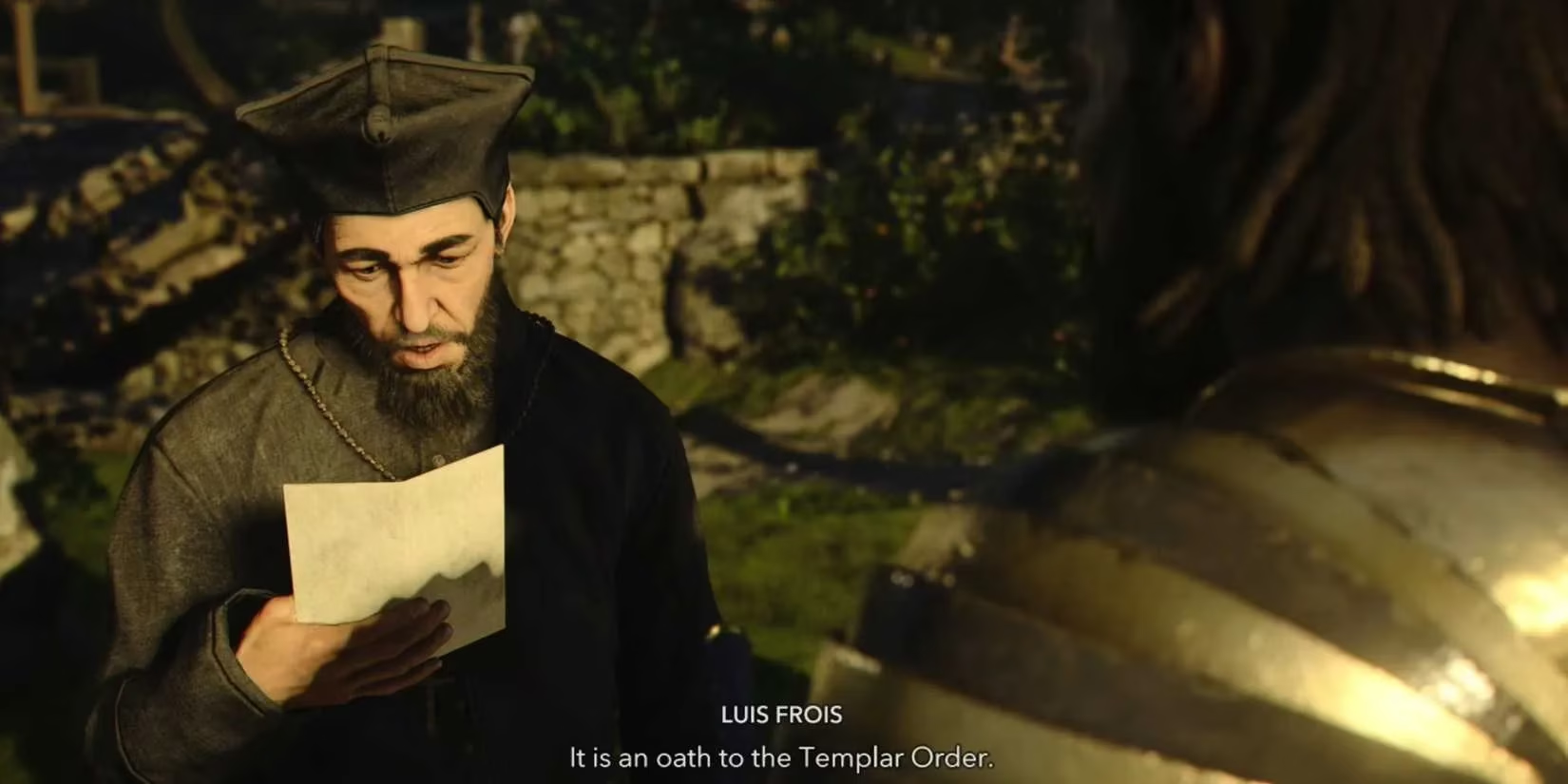
The connections to the broader Assassin's Creed universe are subtle but brilliant. Take, for instance, a moment where the stoic samurai Yasuke seeks translation help from the Jesuit missionary Luís Fróis. As Fróis deciphers Templar documents, he casually mentions the downfall of the Borgia family in far-off Italy, orchestrated by a "mysterious organization." This offhand comment is, of course, a direct nod to the exploits of everyone's favorite Renaissance assassin, Ezio Auditore da Firenze, whose work in Assassin's Creed Brotherhood clearly sent ripples across the globe. It's a wonderful way to tie the new setting into the franchise's rich tapestry, reminding players that the eternal conflict between Assassins and Templars is a truly global affair.
Then there are the references that leave players scratching their heads, wondering if they're seeing cultural history or modern anime. Wandering the Path of Secrets, one might stumble upon a large boulder sliced cleanly in two. The immediate thought for any fan of Demon Slayer is Tanjiro's iconic rock-cutting training. But here's the twist: such stones, known as Itto-Seki, actually exist in Japan with their own folklore. So, is Shadows referencing the anime, or are both the game and the anime independently paying homage to a real-world geological curiosity? 🤔 The developers have remained coy, leaving it as a perfect, ambiguous Easter egg for players to debate.
Ubisoft's love for other gaming giants is on full display, often manifested in playful achievements. The "Adventurer" trophy is a masterclass in meme integration. Forget just hearing a guard complain about an arrow to the knee—Shadows tasks you with actively shooting an enemy in the kneecap with your bow to unlock it. It's a hilarious, interactive callback to Skyrim's most infamous line, turning a passive joke into an active (and slightly sadistic) gameplay objective. Similarly, the "This Is Japan, Actually" achievement winks at both the movie 300 and Assassin's Creed Odyssey. By having Yasuke perform a mighty Spartan kick that sends an enemy plummeting from a great height, the game connects its Japanese setting to the kick-happy legacy of Kassandra and the shouty bravado of King Leonidas.
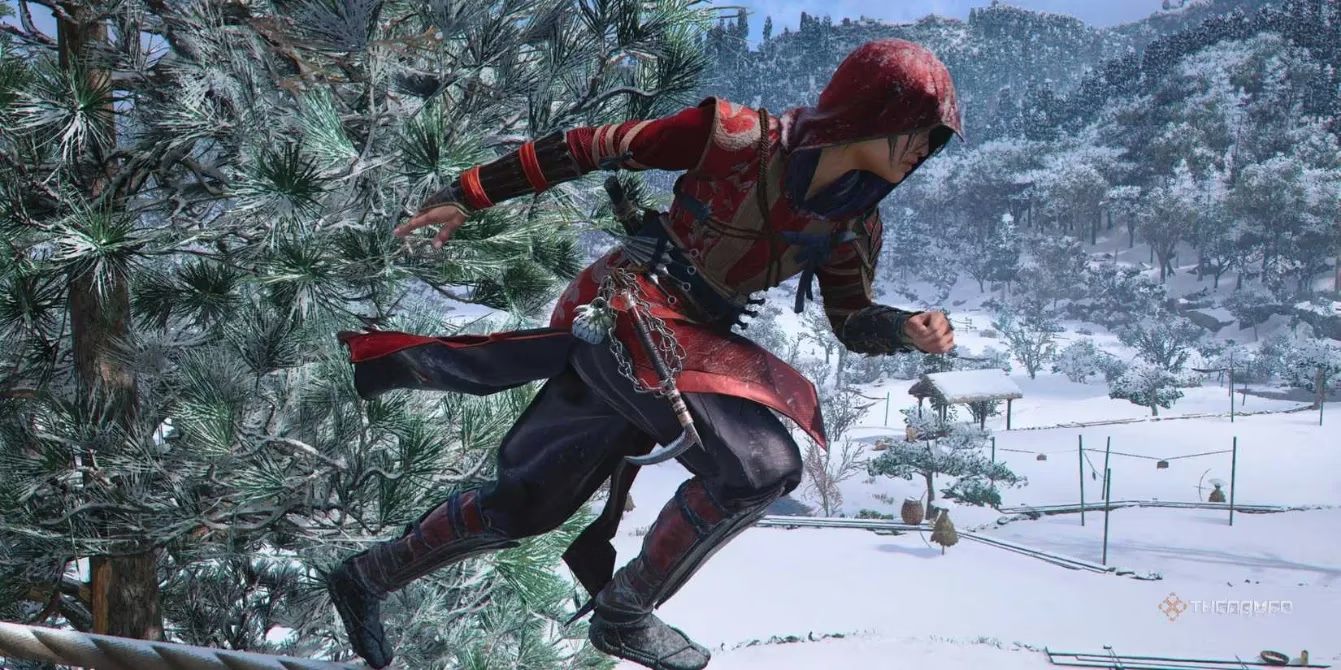
For the otaku gamers, Shadows delivers some confirmed fan service. The developers themselves have acknowledged that nimble shinobi Naoe's sprinting animation—especially when dashing across ropes or rooftops—is a deliberate homage to the iconic Naruto run. While slightly adapted to fit the game's more realistic visual style, the forward-leaning posture and determined vibe are unmistakable. It’s a subtle touch that perfectly suits her character and brings a smile to anyone who ever pretended to run like a ninja from Konoha.
The homages extend into quieter, more atmospheric moments. Deep in the Kii region, weary travelers might find a strangely familiar sight: a solitary bonfire with a sword plunged into its heart. The moment you rest at it, any fan of FromSoftware's soulslikes will feel a wave of nostalgic comfort (and perhaps a little anxiety). This is a pure, unadulterated tribute to the Dark Souls series' iconic checkpoints. In a game about shadows and struggle, finding this "Bonfire Lit" moment is a wonderfully meta piece of solidarity from one challenging adventure to another.
Of course, the references aren't all about other media. Shadows also plays with its own historical setting and real-world mysteries. A particularly charming side quest involves eavesdropping on villagers terrified of a "Suika no Bakemono," or watermelon monster—a yokai with a melon for a head. Investigating reveals it to be a farce, but the quest's climax features one of the perpetrators declaring himself the Melon Lord, a direct and adorable shout-out to Avatar: The Last Airbender. Even the stables get in on the fun. Among the purchasable horses is one named Ringo, described as "a good apple" who "steadily prances on beat." It's a sweet, if slightly dated, reference to Ringo Starr, the Beatles' drummer, proving Ubisoft's joke book has entries from every decade.
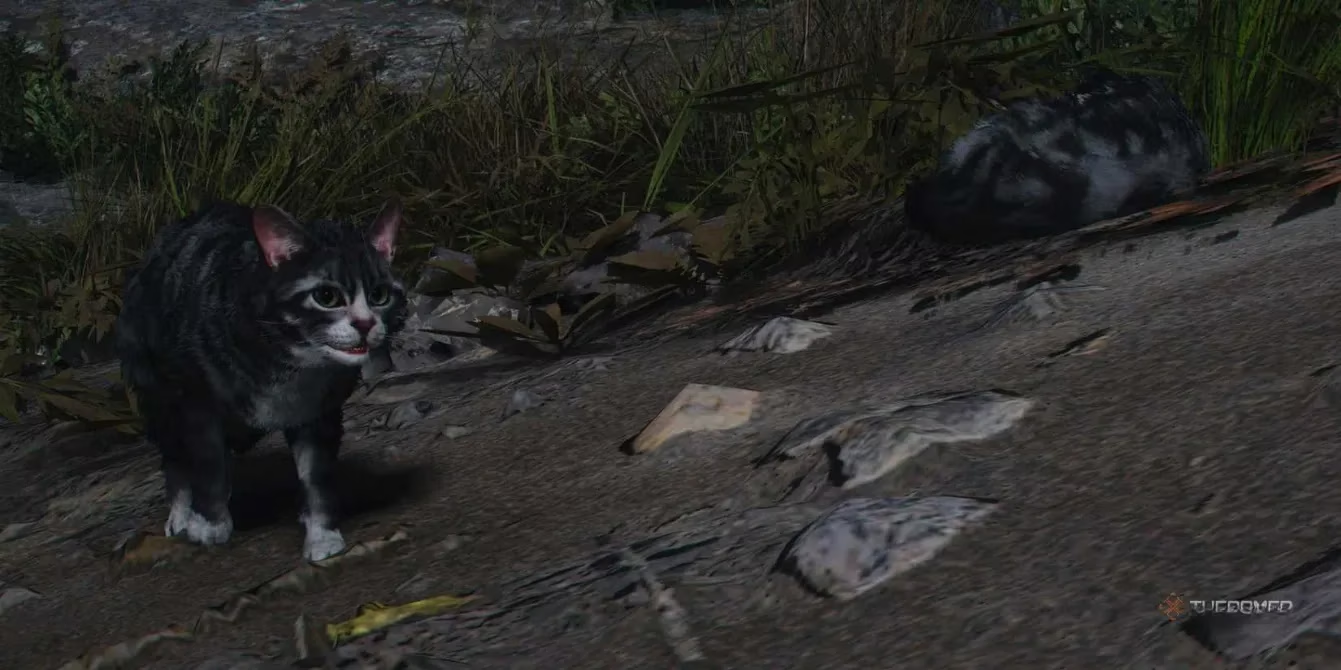
Some Easter eggs are just pure, wholesome content. Cat lovers must make a pilgrimage to Okishima island in the Omi region. Mirroring real-life Japanese "cat islands," this location is absolutely overrun with friendly felines. Players can spend an absurd amount of time petting every single one, a peaceful diversion that also helps populate your hideout with furry companions. It serves no grand narrative purpose, and that's exactly why it's perfect.
Finally, the game nods to the enigmatic history of its own protagonist. In one scene, Yasuke is depicted being utterly distracted by a sumo match, his duties forgotten. This seems to be a clever reference to a surviving piece of period artwork showing a black man sumo wrestling, possibly Yasuke himself, under the watch of Oda Nobunaga. Since the real Yasuke's life is shrouded in mystery, this moment feels like the developers playfully weaving a plausible, humanizing detail into his legend.
From the halls of Monteggiori to the rooftops of Kyoto, Assassin's Creed Shadows proves that a game can be a serious historical fiction while also being a playground for inside jokes and cross-cultural nods. These Easter eggs aren't just frivolous additions; they're a love letter to players who pay attention, creating a shared layer of discovery and humor that exists between the game and its audience. They remind us that behind the stunning graphics and complex mechanics, there are developers who are, first and foremost, fans just like us.