
I’m sitting in my gaming chair, the glow of ancient Kyoto flickering across my face. It’s 2026, and I’ve just finished another session of Assassin's Creed Shadows. The cherry blossoms are perfect, the blade feels heavy, and Naoe’s whispered creed still rings in my ears. Yet, instead of triumph, I feel an odd, nagging confusion. For years, I never understood why people demanded an Assassin's Creed set in Japan—and now that it’s here, I’m still not sure I understand the question.
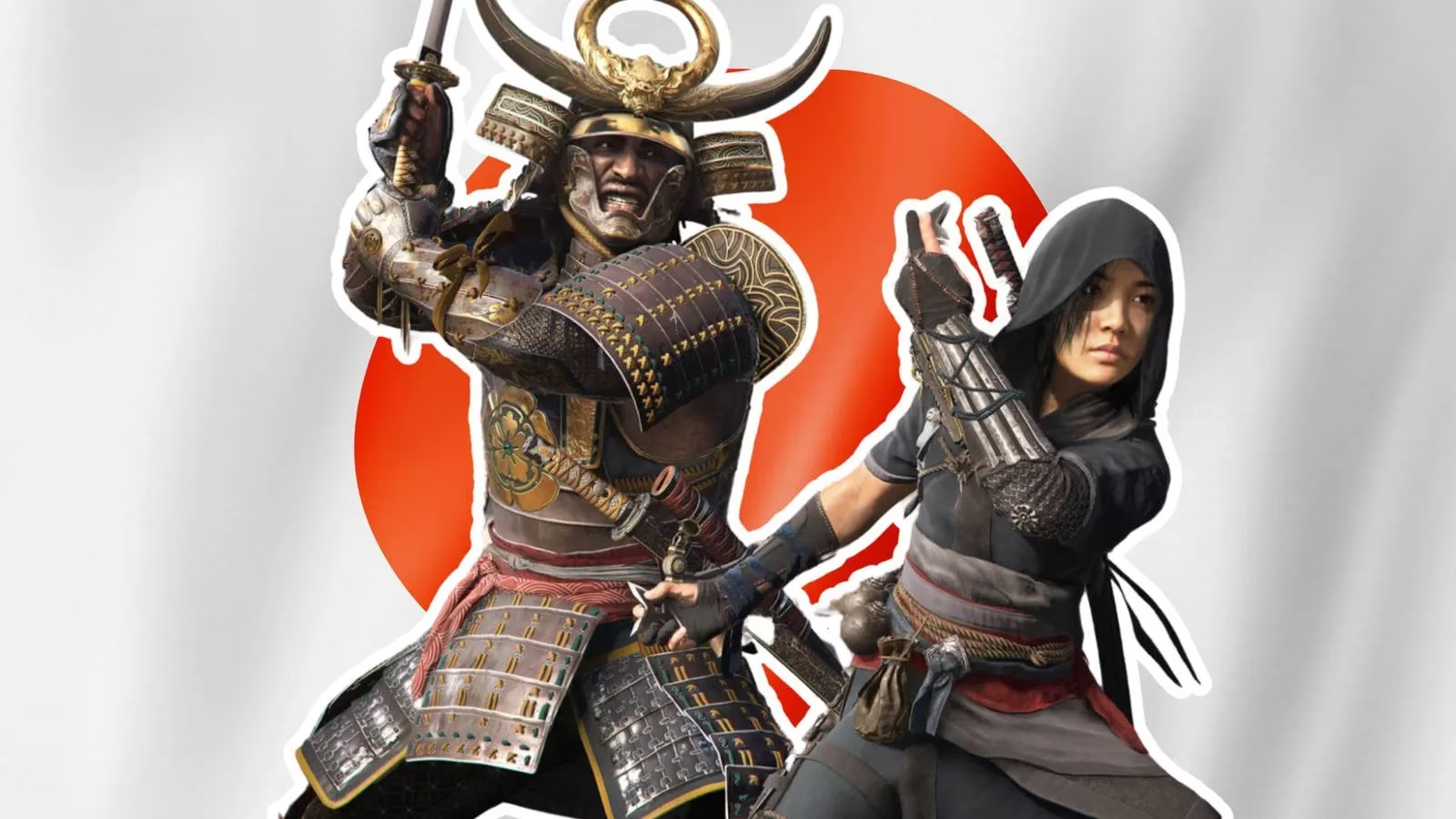
Rewind a decade, and my stance was simple: samurai games are nothing new. Japan has been the beating heart of the gaming industry, gifting us feudal epics since the pixel era. Onimusha let me suck souls into a gauntlet, Nioh turned dark fantasy into a dance of death, and Way of the Samurai gave me branching stories in a tiny village. I never craved an Assassin's Creed there because, well, I’d already climbed every pagoda and dueled under every moon. The series shone brightest when it dusted off forgotten corners of history—the Crusades, Borgia intrigue, revolutionary Paris. Even the Golden Age of Piracy felt rarer in games than being a katana-wielding warrior. When Ghost of Tsushima arrived, I didn’t see it as a final nail in the coffin. It was just another brilliant samurai game—and I figured this town was big enough for both.
But then the chatter changed. Suddenly, everyone declared it was too late for Assassin's Creed to go to Japan. I started nodding along. The populist machine had spoken, and I agreed it probably was a dead end. Fast forward to 2025: Shadows launches, sells millions, and receives rapturous reviews. Its world is lush, its combat visceral—I’m slicing through guards as Yasuke, a historical figure finally given the spotlight. I’m having fun. Yet my mind feels like a shattered vase. What does this mean for the series? Where does it go next? And was it really worth the wait?
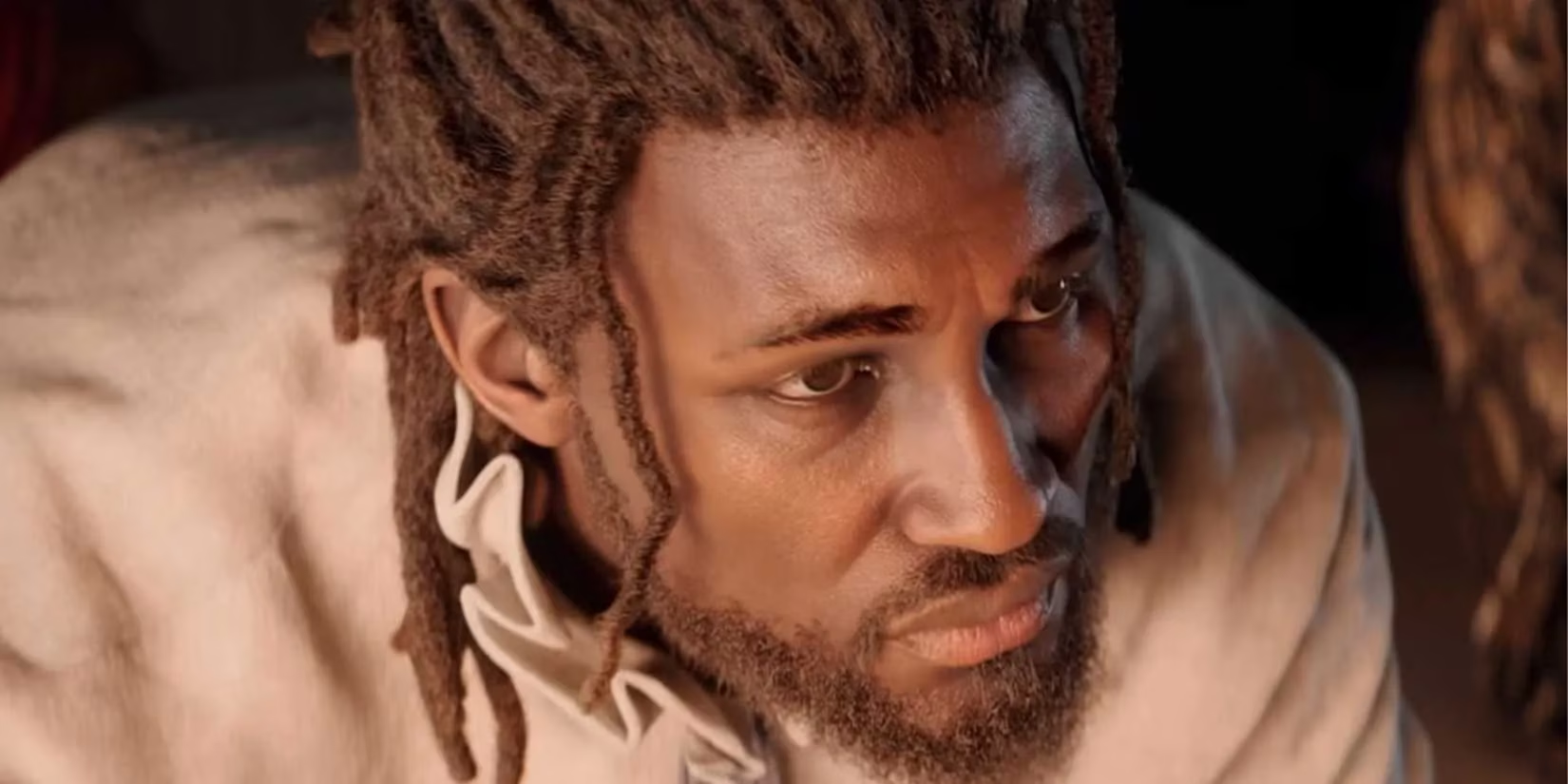
I’m not here to rain on anyone’s parade. Shadows is a solid game, and I carry deep affection for the series—especially Black Flag, my wayward pirate love 🏴☠️. But as I roam Azuchi Castle and chase fox shrines, a hollow ache settles in my chest. The Assassin's Creed I fell for didn’t just let me play in history; it made me the guardian of it. Piecing together Desmond’s story, feeling the centuries-old war between Templars and Assassins bleed into modern parking garages—that was the secret sauce. Every feather I collected in Florence, every ship I boarded in Virginia, felt like an echo that mattered. They meant something bigger.
In Shadows, the modern-day narrative is barely a whisper, an email tucked into a menu. The RPG bloat I’ve been wrestling since Origins is here in full force: gear scores, level gates, and a map that’s \u201cbigger than ever.™\u201d But without the tether to a grander conflict, Shadows risks becoming exactly what I feared—just another samurai game. A brilliant one, yes. One that finally lets me play as the actual historical Yasuke. But oddly, for a title starring its first real-life protagonist, the history feels less intertwined with mythos; it’s a playground, not a creed.
Maybe that’s what everyone wanted after all. I wonder how this squares with Ghost of Tsushima getting there first, but the market has spoken: people are deliriously happy to play a samurai game with an Assassin’s Creed logo. And perhaps that’s fine. I just can’t shake the thought of what might have been if the series had tackled feudal Japan back in the days of Assassin’s Creed 3, when the modern-day DNA still burned bright with conspiracy. What would Ezio’s flair or Connor’s brutal honesty have drawn from a conflict between shinobi shadows and Portuguese Templars? We’ll never know.
The real test, however, lies ahead. Ubisoft is marching toward Hexe—medieval Bavaria, witchcraft trials, a setting dripping with series potential. It’s exactly the kind of obscure, rich period that made the franchise legendary. But after Shadows’ success, will a game without katana hype ever capture that lightning? The series needs to respect its own history to make Bavaria a hit, and that means weaving back the mysterious thread that once held every Assassin’s Creed together. I’m rooting for you, old friend. Because without your roots, you’re just another ghost in a bamboo forest. 🍂