
I remember the exact moment I found my first Kanabo in Assassin’s Creed Shadows. It was early 2026, and I had been eagerly awaiting this latest entry, hoping it would finally marry classic stealth with modern RPG depth in a way no other title had. That heavy club for Yasuke felt like discovering a new character class entirely—its skill tree unfolded like a promise of brutal new combos, and I couldn’t wait to see what other exotic weapons the game had in store. Little did I know, that initial excitement would soon be buried under an avalanche of forgettable gear.
Fast forward 60 hours. My inventory has become a museum of mediocrity. Dozens of Tantos, Kusarigamas, and Long Katanas clutter the menu, most of them common or uncommon, all sharing the same lackluster perks. The thrill of looting a glowing chest dulled into a chore: open, compare, dismiss. Because once you’ve found a legendary piece you love—say, the Shadow’s Edge Tanto with its perfect engravings—every other drop becomes instantly obsolete. You can keep that one treasured item upgraded throughout your entire playthrough, so why would you ever look at anything else? This is the glaring loot problem that has haunted the series since Origins, and Shadows only magnifies it.
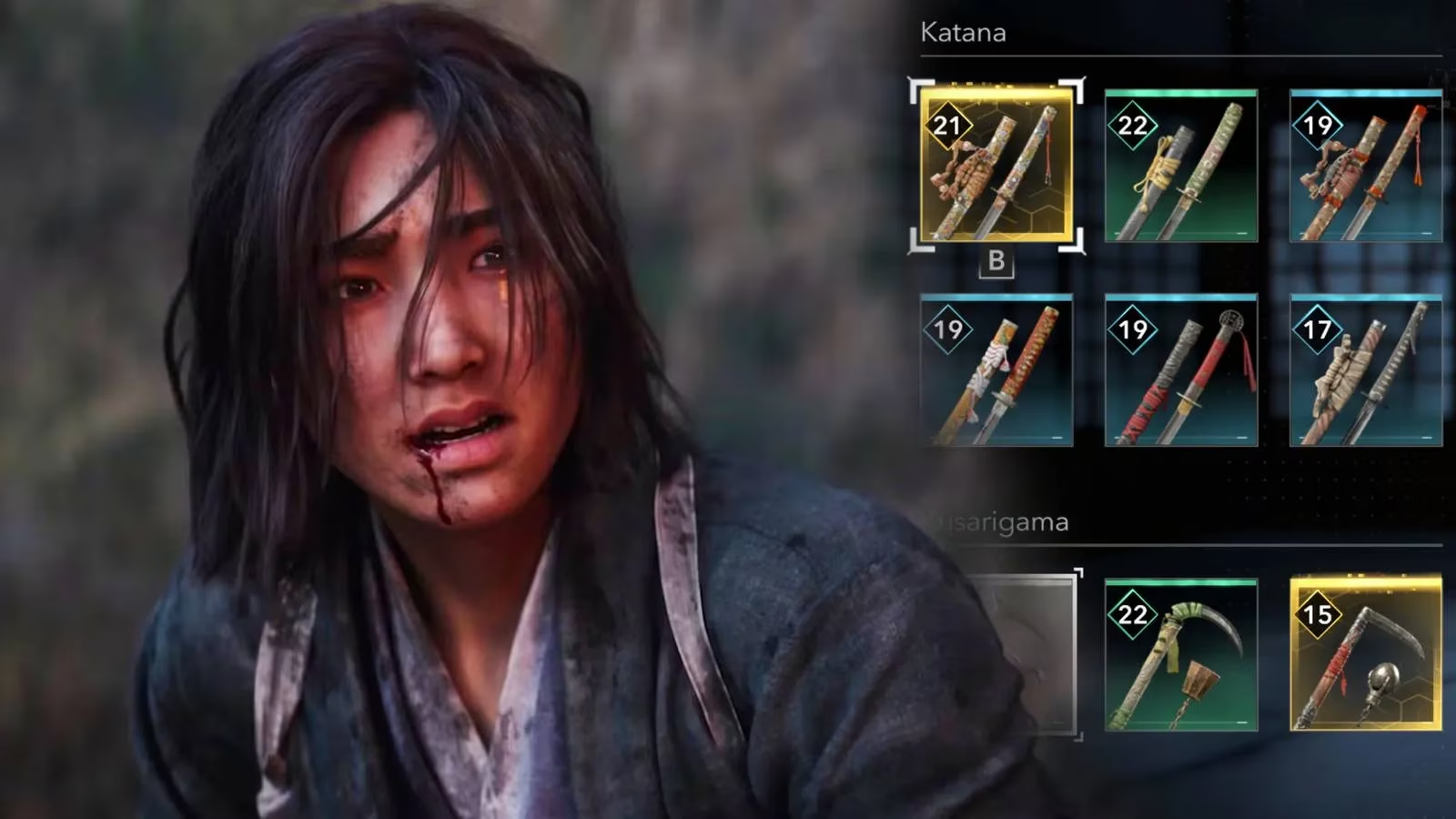
The game tries to give these redundant pieces a purpose through dismantling. You scrap gear for upgrade materials, but that quickly becomes pointless because iron, leather, and silk are absurdly easy to find in chests or on fallen enemies. Selling to a merchant for mon is equally hollow—money flows like water in feudal Japan. Soon, clearing out my inventory feels less like resource management and more like digital housekeeping. I’m spending precious minutes in menus just to remove clutter, and that’s time I could be stalking a castle rooftop or perfecting a chain assassination as Naoe. The loot, rather than empowering me, becomes an obstacle to the fun.
However, Shadows did manage to rekindle some of that spark with its hideout system. Upgrading your hideout requires enormous amounts of wood, stone, and other resources that you can’t simply grind from every random patrol. You have to scout enemy camps, tag supply stockpiles, and wait for the seasons to change before your scouts bring back the haul. This scarcity makes every resource cache I discover in the open world or inside a conquered castle feel genuinely rewarding. I find myself planning detours just to loot a well-guarded stockpile, the way I used to hunt for legendary gear in older games. It’s a brilliant twist that finally gives weight to exploration.
Even better are the cosmetic items. Decorations, statues, even new trees for my garden—those small victories bring the hideout to life. I still grin when I recall unboxing a delicate bonsai from a random chest hidden in a bandit camp. That token sent me straight back to my home base, where I spent ten minutes rotating it to catch the evening light just right. In moments like that, loot feels meaningful again, transforming a mere gameplay hub into a place I actually care about. But that magic is the exception, not the rule.
The dual-protagonist setup improves things slightly by more than doubling the legendary equipment pool. Completing a main quest or clearing a samurai castle often drops a unique weapon for Naoe or Yasuke, and those reveals can be electrifying. I vividly remember the rush of finding the Crimson Demon Kanabo after a grueling boss fight—it had a life-steal effect that completely changed how I played Yasuke. Yet the shine fades fast. Once I settled on my favorite sets—Naoe’s Silent Viper armor and Yasuke’s Unyielding Oni plate—every subsequent legendary, no matter how rare, became just another paperweight. And unlike common items, you can’t even dismantle legendaries for parts. They sit in your inventory like relics from a past life, mocking my inability to let go.
This is where the series needs a hard rethink. Open-world Assassin’s Creed maps keep growing larger, and Ubisoft shows no sign of shrinking them back after the experiment of Mirage. So the loot system must scale accordingly, or it will continue to collapse under its own weight. One approach I’d love to see is a randomly generated loot table, similar to the Borderlands games or The Legend of Zelda: Breath of the Wild. Randomized perks and stat variations could keep gear fresh even dozens of hours in, encouraging experimentation and making every chest a potential game-changer. But that alone isn’t enough—randomization can still become tiresome if the world is vomiting loot at you every five steps. The frequency of drops needs to be toned down drastically so that each acquisition feels deliberate.
More importantly, we need impactful late-game items. In Shadows, you can find top-tier equipment surprisingly early, and then you stick with it for the majority of the journey. Future titles should gate truly unique weapons and armor behind endgame challenges, hidden dungeons, or complex quest chains. These items should not only look radically different from anything you’ve seen, but also offer abilities that reshape your playstyle in ways earlier gear couldn’t. Imagine a Naoe tool that lets her phase through walls for a few seconds, or a Yasuke armor set that reflects projectiles—rewards that make you rethink everything you’ve learned. That’s the kind of loot that keeps an open world alive long after the credits roll.
As I look back on my 60 hours in feudal Japan, I’m grateful for Shadows’ many innovations. The dual protagonists truly do let me choose my assassin fantasy, and the world is a stunning, dynamic playground. But the loot system remains a ghost haunting an otherwise stellar experience. I hope the next Assassin’s Creed, perhaps already in development for 2027, learns from these missteps. Until then, I’ll be here, still pressing the ‘scrap all’ button while dreaming of the day every chest holds the potential for genuine wonder—not just another copy of a weapon I’ll never use.