
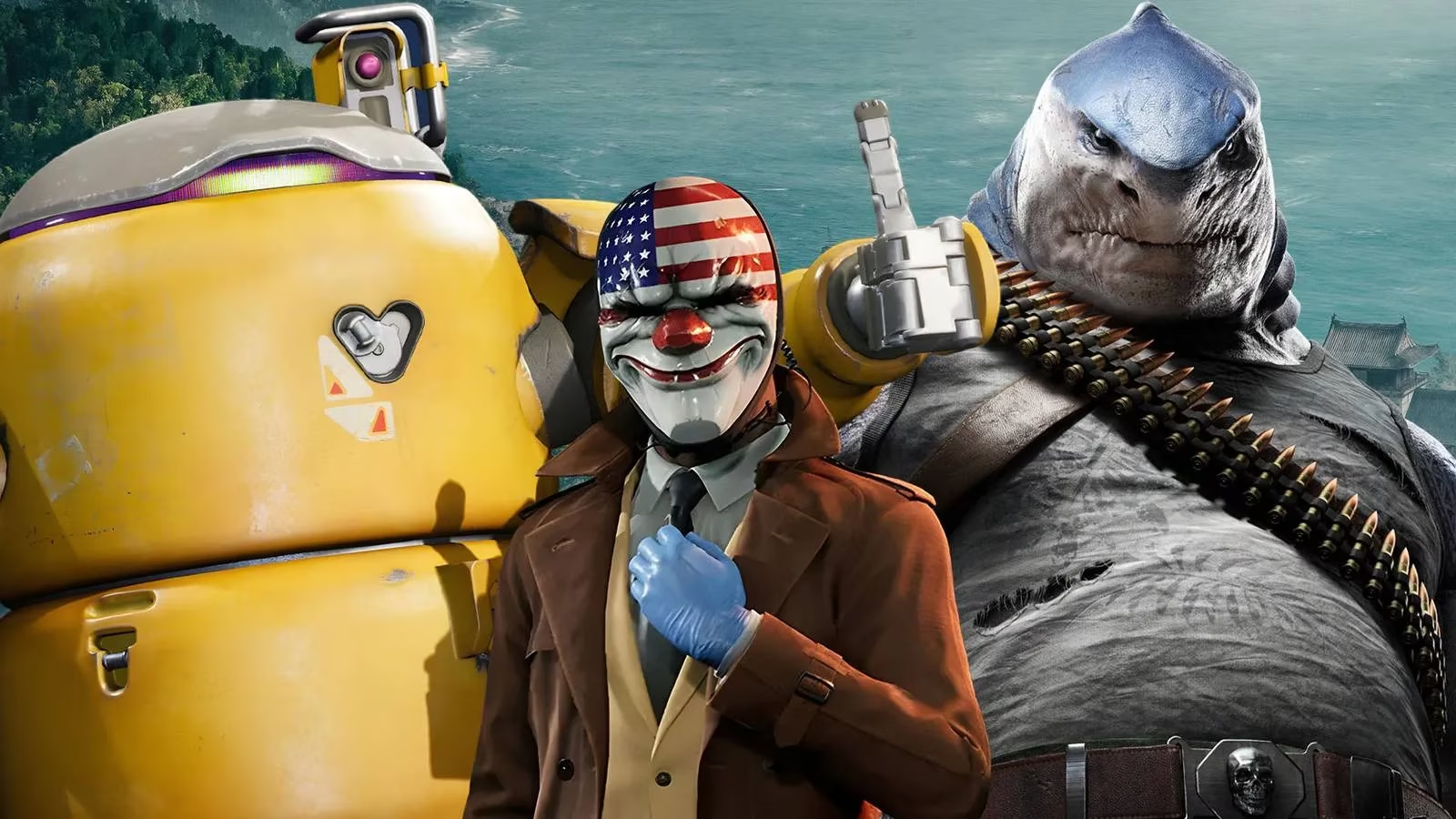
In the treacherous waters of PC gaming, not every AAA vessel sails triumphantly into the sunset. Some crash against the rocky shores of player apathy with spectacular fireworks of failure, leaving developers scrambling for lifeboats and shareholders weeping into their spreadsheets. Steam, that bustling digital harbor, has witnessed more high-profile shipwrecks than a hurricane season, where even franchises with billion-dollar pedigrees can sink faster than an anchor made of microtransactions. What transforms a potential blockbuster into a cautionary tale? 🚢💥
Payday 3: The Online-Only Heist Hijinks
After a decade-long wait, this sequel promised to revolutionize cooperative crime but instead delivered a masterclass in how not to launch a live-service game. Its always-online requirement made solo play impossible and multiplayer sessions feel like negotiating with dial-up internet. With fewer heists than a toddler's piggy bank raid and server stability resembling Jenga during an earthquake, players abandoned ship en masse. The current player count? A lonely 500 souls—meanwhile, Payday 2 thrives with 30,000 daily players. Who knew forcing online connectivity could backfire harder than a botched bank robbery? 💰🔫
People Also Ask: Can Payday 3 ever recover?
When your predecessor has 247k peak players and runs on a potato PC, winning back trust requires more than patches—it demands a miracle.
Assassin's Creed Shadows: When Samurai Met Stagnation
Ubisoft finally granted wishes for feudal Japan... years after Ghost of Tsushima already nailed it. Players encountered the usual suspects:
-
🗺️ A map bigger than your backlog
-
🔁 Tasks more repetitive than elevator music
-
🐛 Bugs thriving like uninvited cockroaches
Peaking at 64,627 players, it begged the question: when does a 15-year-old formula stop being "classic" and start being creatively bankrupt? The dual protagonist gimmick couldn't disguise the fatigue.
Diablo 4: Loot Grind Meets Player Decline
After 11 years of anticipation, Blizzard's ARPG behemoth proved that dungeon crawling isn't the genre titan it once was. Despite gorgeous visuals and visceral combat, it stumbled with:
| Issue | Consequence |
|---|---|
| Microtransaction overload | 🤑 Players felt nickel-and-dimed |
| Endgame repetition | 🔄 Engagement dropped faster than rare loot |
| Niche appeal | 🎯 Peaked at just 55,561 players |
With only 20% of launch players still active, one wonders: can any live-service game survive without fresh content injections?
Marvel's Avengers: Superheroes, Subpar Gameplay
Square Enix assembled Earth's Mightiest Heroes into a looter-brawler that forgot to include fun. Combat felt as weighty as punching cotton candy, and the live-service structure turned character unlocks into chores. Word spread faster than Thanos' snap: this wasn't an epic adventure but a $60 disappointment. Shutting down in 2023 with a 28k player peak, it proved even billion-dollar IPs can't save a game that plays like spreadsheet simulator. 💼❌
Suicide Squad: Kill the Justice League - Rocksteady's Misstep
Fans expected Arkham-style brilliance but got looter-shooter mechanics that felt alien to the franchise. The audacity of turning Batman villainous while stuffing the story with live-service glitter led to:
-
😤 Player rebellion against "run-and-gun" combat
-
📉 13k concurrent players at launch
-
💀 Content support axed by January 2025
Why did Rocksteady trade precise freeflow combat for generic bullet spraying? The answer lies buried with the game's failed promises.
Skull & Bones: The AAAA Sinkhole
Ubisoft's "AAAA" pirate simulator offered naval battles without pirates—just ships. Players sailed through:
-
🌀 Endless fetch quest loops
-
💸 Budget bloat visible from space
-
⚓ 2,581 all-time peak players
Calling itself "AAAA" only highlighted the absurdity: it was less "Treasure Island," more "Accounting: The High Seas Edition."
Redfall: Vampires vs. Vanishing Players
Arkane's co-op shooter had Left 4 Dead ambitions but delivered bugs instead of thrills. With gameplay as exciting as watching garlic grow and a narrative thinner than vampire skin, it flatlined at 1,560 players. The studio closure that followed felt like poetic justice: sometimes dead should mean dead. 🧛☠️
People Also Ask: Do studios learn from these failures?
When Redfall's closure follows Avengers' shutdown, the lesson seems as elusive as a polished launch.
Saints Row Reboot: Identity Crisis on Wheels
Ditching signature absurdity for sanitized quirk, this reboot drove off a cliff. Peak players? 2,975. The result? Developer Volition shuttered permanently. Who greenlights a Saints Row game without the soul? It’s like ordering champagne and getting sparkling tap water. 🍾🚱
MindsEye: When Hype Meets Reality
This "ex-GTA devs" project promised futuristic action but delivered broken promises and 1k peak players. Despite "ever-expanding content" pledges, it’s now gaming's most expensive ghost town. 🤖👻
Concord: PlayStation's 2-Week Wonder
The speedrun champion of flops! Sony's hero shooter lasted less than a fortnight before refunding everyone. Its 660-player peak wasn’t just low—it was a meteor-strike extinction event. This wasn't just failure; it was a masterclass in misreading the room. 🎮💣
💭 Final Thoughts
These titanic disasters share eerie commonalities: live-service overreach, ignored player feedback, and identity crises. Yet amidst the wreckage, questions linger: will publishers ever prioritize polish over profit margins? Can franchises resurrect from sub-1k player graves? One thing’s certain—Steam’s graveyard keeps expanding, and the ghosts of AAA hubris aren’t resting quietly. 🕹️👻
Critical reviews are presented by Polygon, a leading source for gaming culture and industry analysis. Polygon's reporting on AAA game launches often emphasizes how live-service models and rushed development cycles can undermine player trust, as seen in recent coverage of titles like Redfall and Skull & Bones, where community feedback and post-launch support failed to reverse declining engagement.