
In the year 2026, a player wanders through the lush, open worlds of modern action games, blade in hand, yet feels a profound emptiness. They have journeyed through the meticulously crafted Feudal Japan of Assassin’s Creed Shadows, deflected blaster bolts in Star Wars Jedi: Survivor, and faced the horrors of Dragon’s Dogma 2. Each game is celebrated, each combat system polished to a fine sheen. Yet, with every clash of steel, a ghost whispers in the player's ear—a memory of a different dance, a more demanding rhythm. The ghost’s name is Sekiro: Shadows Die Twice, and its legacy is a curse of perfection. How can one return to the playful sparring of other worlds after learning the lethal ballet of a true shinobi?
The Rhythm of Perfection
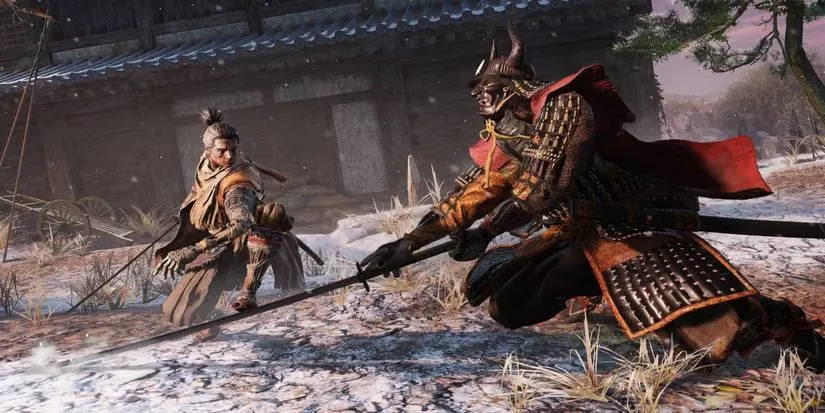
Sekiro was not merely a game; it was a crucible. It demanded a symbiosis between player and pixel, a total surrender to its philosophy of precision. Every encounter was a conversation conducted in the language of clashing steel, where a mistimed block meant not a minor setback, but a swift, definitive end. The community often called it a rhythm game in disguise—a brutal symphony where the player must learn the tempo of each enemy's breath, the cadence of their attacks. Was it punishing? Absolutely. But in that punishment lay a transcendent clarity. Mastering its systems felt less like learning a game mechanic and more like internalizing a martial art. The sword became an extension of intent, and victory was a state of flow achieved only through absolute focus. This wasn't combat designed for spectacle alone; it was combat as a test of will.
The Lingering Shadow on Other Blades
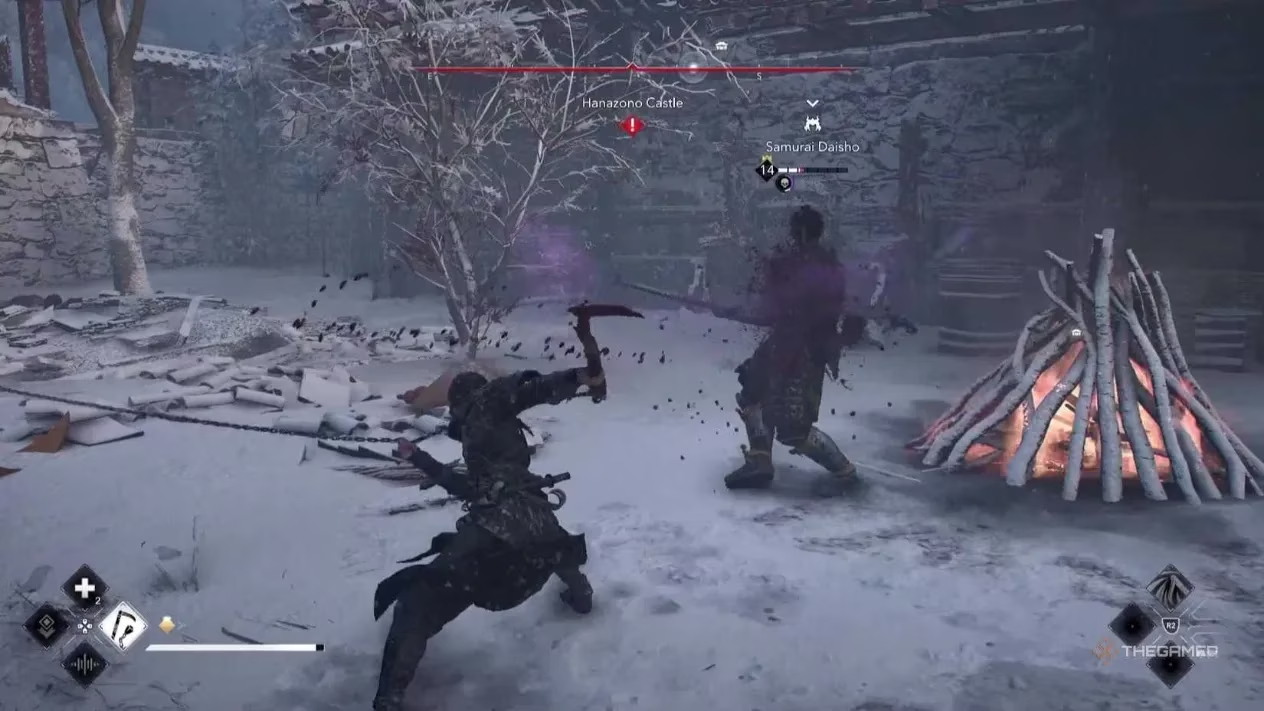
This mastery, however, came with a price. Once the brain has been rewired by Sekiro's exacting standards, other systems can feel... untethered. The player finds themselves in the shoes of a legendary assassin in Assassin’s Creed Shadows, facing down a samurai in a moonlit duel. The scene is breathtaking, the animations fluid. Yet, when the swords meet, something feels absent. The parry window is generous, the enemy's attacks lack the telegraphic clarity of a Sekiro miniboss, and success can often be found through aggressive button-mashing rather than studied precision. The thrill of the fight evaporates, replaced by a hollow efficiency.
This phenomenon extends far beyond a single franchise. Consider these acclaimed titles and the subtle disconnect a Sekiro-scarred player might feel:
| Game | Combat Praise | The Sekiro Echo Chamber |
|---|---|---|
| Ghost of Tsushima | Lauded for its cinematic "Stance" system and visceral feel. | The stand-off mechanics and broader parry windows feel more like a stylish movie fight than a life-or-death duel. |
| Stellar Blade | Celebrated for its tight, responsive action and challenging bosses. | Despite its difficulty, the defensive options lack the razor's-edge risk/reward of a perfect deflect. |
| Dragon's Dogma 2 | Praised for its weighty, impactful physics and monster climbing. | The swordplay itself can feel secondary to positioning and pawn commands, lacking intimate dueling focus. |
| Star Wars Jedi: Survivor | Heralded for blending Souls-like mechanics with accessible action. | The lightsaber combat, while fun, simplifies the posture-breaking dance into a more forgiving pattern-recognition game. |
The cruel irony? This isn't a critique of these games' quality. It is, as the player knows, a problem of context. Assassin’s Creed aims to make players feel powerful and agile across a vast historical playground. Jedi: Survivor wants to deliver a heroic, cinematic Star Wars fantasy. They succeed brilliantly at their goals. The issue resides not in their design, but in the altered palate of the player. Sekiro didn't just set a high bar; it redefined the very taste of conflict.
A Future of Longing
Six years have passed since Wolf first raised his Kusabimaru, and the gaming landscape has evolved. Yet, for a dedicated cohort, the itch remains unscratched. Tutorials that promise "mastery through parrying" now elicit a sigh, as the subsequent mechanics rarely demand true mastery. The player is left in a strange limbo, appreciating great games while secretly wishing they would ask for more—more attention, more precision, more consequence.
What is the solution? The community waits, hope flickering, for a successor. Could a hypothetical Sekiro 2 finally provide the answer? Or has the experience been so singular that it can never be replicated? Perhaps the only recourse is to seek out mods that twist other worlds into shapes of brutal difficulty, trying to force them to sing Sekiro's unforgiving song. But deep down, the player knows the truth: they aren't just looking for a hard game. They are chasing the ghost of a feeling—the moment when focus crystallized into action, when the virtual sword in their hand felt utterly, devastatingly real. That ghost, born in the sunlit fields of Ashina, continues to haunt every digital blade they wield, a permanent and beautiful scar on their perception of virtual combat.