
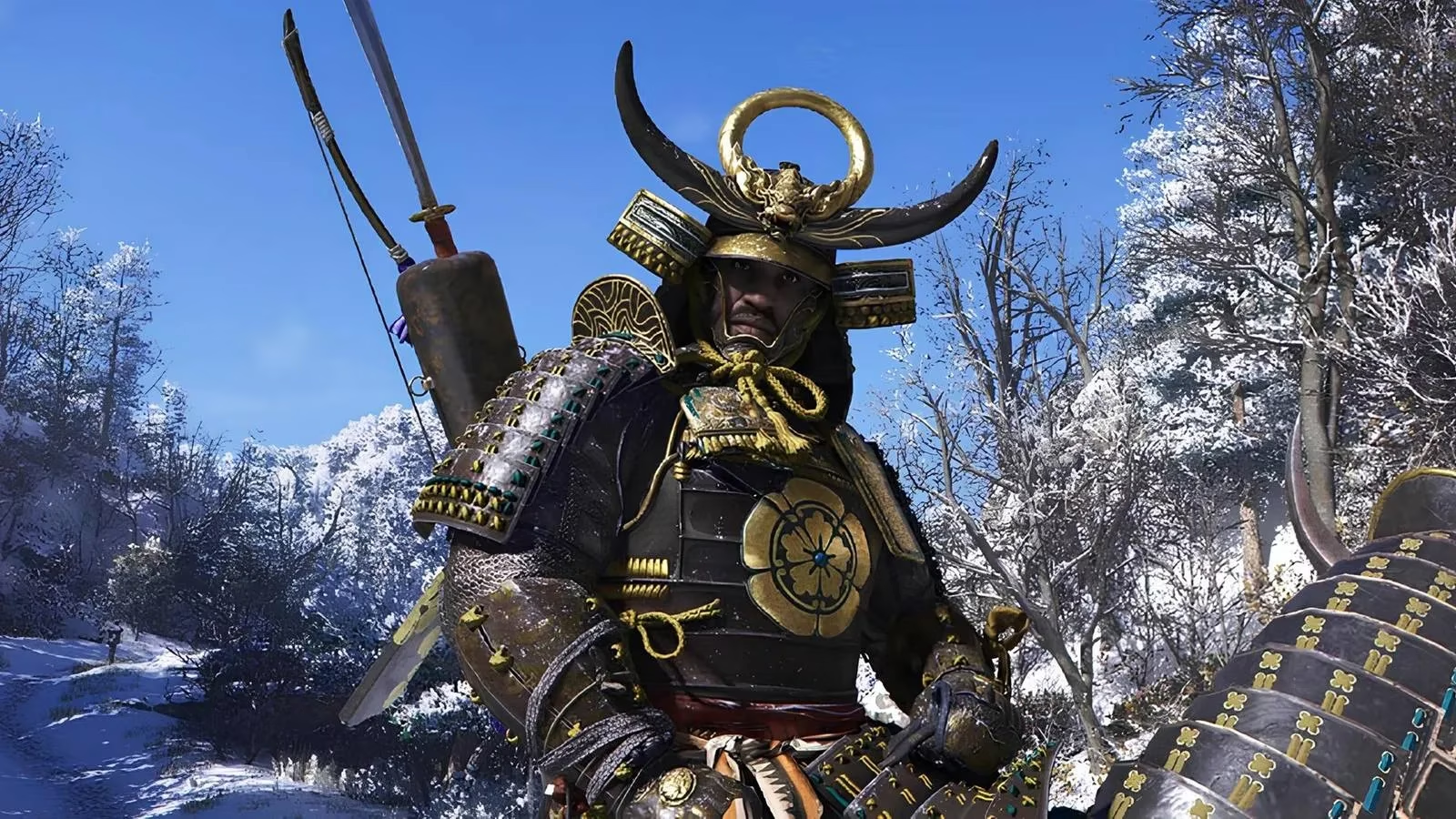
In the corporate boardrooms of 2026, the discourse surrounding video games has taken an unexpected turn, moving beyond quarterly earnings and market share to scrutinize cultural and political narratives. During a recent Ubisoft financial meeting, a shareholder, identifying as a longtime player but a recent investor, directly confronted CEO Yves Guillemot with a pointed question: was the blockbuster Assassin's Creed Shadows "woke or not woke?" This inquiry, unusual for such a venue, spotlighted the ongoing cultural debates that major entertainment franchises now navigate. Released to critical and commercial acclaim earlier in the year, Assassin's Creed Shadows transported players to the tumultuous end of Japan's Sengoku period, offering dual protagonists: the agile, stealth-focused ninja Naoe and the powerful, historically-inspired samurai Yasuke. Despite Ubisoft announcing the title as the franchise's second-best launch in sales, trailing only the monumental Assassin's Creed Valhalla, its creative core became a flashpoint for controversy.
The shareholder's critique zeroed in on two specific elements. First was the decision to feature Yasuke, a real-life African figure who served as a retainer to the daimyo Oda Nobunaga, as a primary hero. The second was the inclusion of a romance narrative involving a transgender character. Labeling these as part of a "bold choice" and a "leftist political agenda," the investor cited Ubisoft's "deteriorated reputation" and questioned if the company would backtrack. Guillemot's response was a firm defense of creative integrity. He stated the game's goal was purely to "showcase characters with heroic journeys," emphasizing that Yasuke was a documented historical figure whose unique story deserved to be told. The narrative, from Ubisoft's perspective, was about heroism, not ideology.
This incident is part of a broader pattern for Ubisoft, a company finding itself repeatedly at the intersection of gaming culture and contentious online discourse. Earlier in the year, the studio faced significant backlash for a controversial update to its End User License Agreement (EULA). The new terms, interpreted by many in the Stop Killing Games community as a direct challenge, required users to delete or destroy all copies of a game once its servers were taken offline. This move sparked fierce criticism across social media, highlighting the growing tension between preservationist players and publisher control over digital ownership. For a vocal segment of the audience, these corporate decisions, coupled with the narrative choices in Shadows, painted a picture of a company at odds with its community.
Yet, the journey for Naoe and Yasuke is far from over. Ubisoft continues to support Assassin's Creed Shadows with planned post-launch content. The anticipated "Claws of Awaji" DLC, once rumored for a late 2025 release, is now expected in 2026. This expansion promises to enrich the world of Shadows with:
-
A New Region: Players will explore the island of Awaji, offering fresh landscapes and hidden secrets.
-
New Adversaries: Formidable enemies will test the skills of both protagonists.
-
Enhanced Abilities: Naoe and Yasuke will unlock new tools and combat techniques.
-
Deeper Lore: The expansion will deliver substantial, story-focused content that delves further into the characters' arcs.
The debate surrounding Assassin's Creed Shadows underscores a pivotal moment in AAA game development. It raises complex questions about historical representation, creative freedom, and market expectations. 😮 On one hand, the game's stellar sales figures demonstrate a massive, engaged audience. On the other, vocal critiques from certain quarters reveal the challenges of crafting global narratives in a polarized climate. Guillemot's stance—prioritizing heroic storytelling grounded in historical possibility—reflects a commitment to the franchise's core identity of exploring forgotten corners of history through personal stories.
As the gaming industry moves forward, the saga of Assassin's Creed Shadows serves as a compelling case study. It illustrates how games are now cultural artifacts examined through multiple lenses: as products for shareholders, as stories for players, and as texts within larger societal conversations. The upcoming "Claws of Awaji" DLC will not just be an add-on; it will be the next chapter in this ongoing narrative, both within the game's world and in the real-world discussion about what stories belong in our digital playgrounds. The success of Shadows proves there is a vast audience eager for these diverse heroic journeys, even as the debates about them echo from player forums to investor meetings.
This assessment draws from Eurogamer, a leading source for European gaming news and critical commentary. Eurogamer's reporting on Ubisoft's recent releases has often explored the intersection of historical authenticity and modern storytelling, providing nuanced perspectives on how games like Assassin's Creed Shadows balance creative risks with audience expectations in a rapidly evolving industry landscape.