
In a significant strategic pivot, Ubisoft has officially announced it will be extending development cycles for several of its cornerstone franchises, a move directly inspired by the resounding success of Assassin's Creed Shadows. The company's CEO, Yves Guillemot, confirmed the new directive during the latest financial results briefing, signaling a clear shift in philosophy towards delivering more polished and high-quality gaming experiences, even if it means fans have to wait a bit longer. This decision comes on the heels of a mixed reception for recent titles and underscores a corporate commitment to getting it right, a sentiment that's music to the ears of many in the gaming community who have long clamored for developers to take their time.

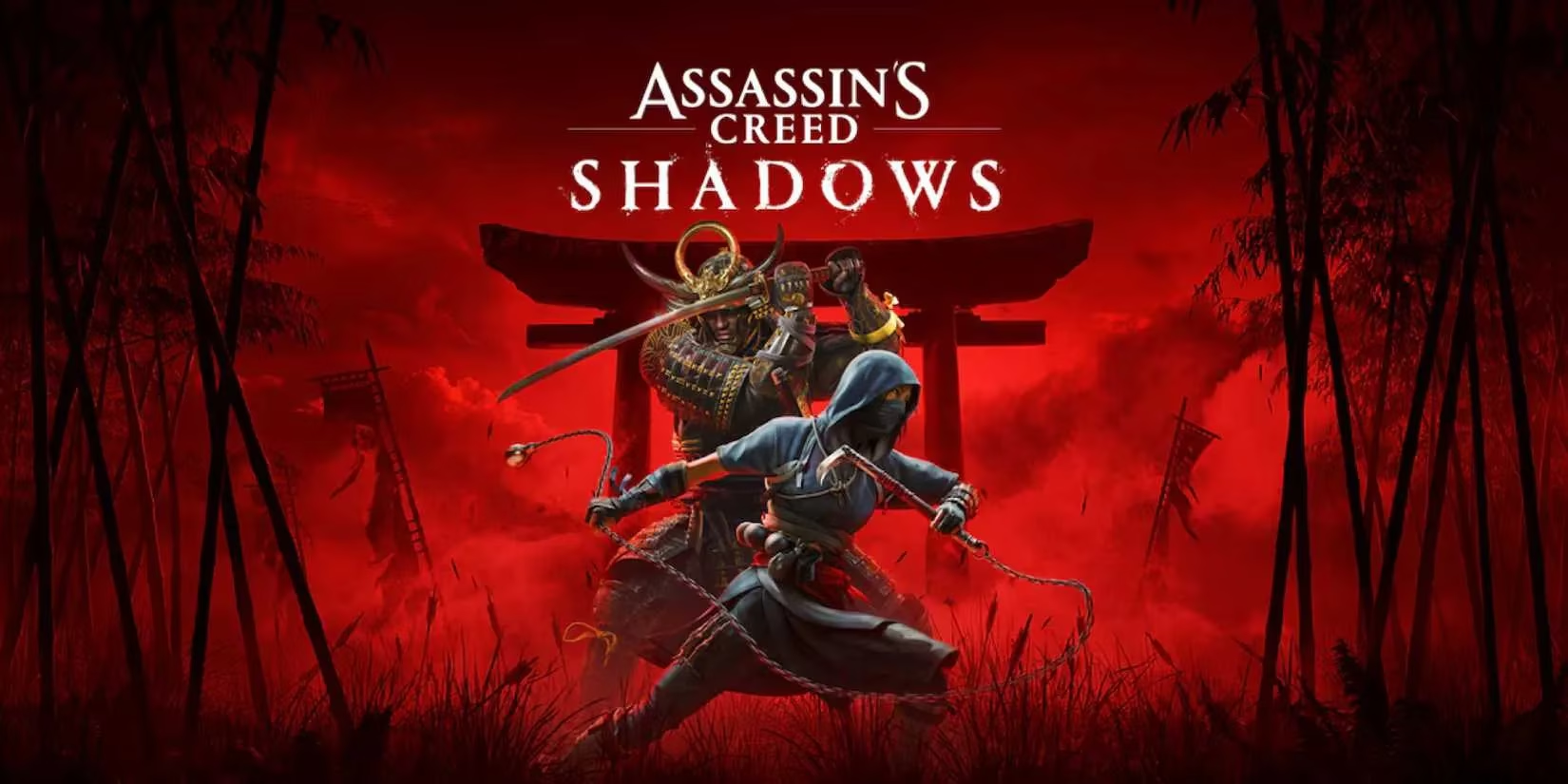
The catalyst for this strategic overhaul was none other than Assassin’s Creed Shadows. Released in March 2025, the title faced a rocky road during development, with multiple delays and initial fan skepticism. However, the decision to grant it extra polish time paid off spectacularly. The game launched to critical acclaim, securing the second-highest day-one sales in the franchise’s storied history and attracting a staggering 3 million players within its first week. This success story served as a powerful proof-of-concept for Ubisoft's leadership. "The launch of Assassin's Creed Shadows was a defining moment," Guillemot stated. "It reaffirmed the power of the Assassin's Creed brand, with a highly favorable community response from long-time fans and new players alike." The lesson was clear: giving teams the time they need isn't a delay; it's an investment in quality that the market rewards.
This new 'slow and steady' approach is a direct response to recent challenges. The company has faced headwinds from the poor reception of several high-profile releases in the past few years, including Star Wars: Outlaws and Avatar: Frontiers of Pandora. These titles, while ambitious, were often criticized for technical issues and a perceived lack of polish at launch. The negative feedback, coupled with the initial lukewarm response to Assassin's Creed Shadows gameplay previews, forced Ubisoft to take a hard look at its production pipeline. The result is a corporate strategy that now prioritizes development depth over meeting rigid annualized release schedules.
So, what does this mean for gamers eagerly awaiting the next big thing from Ubisoft? The company has confirmed that the extended development timelines will apply to projects from its top-tier franchises. This elite list includes:
-
Assassin’s Creed 🏹
-
Far Cry 🔥
-
Rainbow Six ⚙️
-
The Division 🛡️
-
Ghost Recon 👻
Guillemot was specific about the revised launch windows. The affected titles are now targeting releases after the current financial year, which concludes on March 31, 2026. This means the next major installments from these beloved series will likely hit shelves between April 2026 and March 2028. "After a review of our pipeline, we have decided to provide additional development time to some of our biggest productions in order to create the best conditions for success," Guillemot explained. "As a consequence, FY2026-27 and FY2027-28 will see significant content coming from our largest brands." In other words, get ready for a potential content avalanche in the latter half of the decade, but one that's been meticulously crafted.
The financial and operational implications of this shift are profound. Guillemot also announced that Ubisoft has completed its initial cost-saving program ahead of schedule and is committing to an additional €100 million in savings over the next two years. This financial discipline is intended to "drive structural efficiencies and reinforce the foundations of our organisation," creating a more stable environment for these longer, more ambitious development cycles. It's a classic case of 'short-term pain for long-term gain,' with the company betting that higher-quality releases will lead to stronger sales, better review scores, and enhanced player loyalty—a virtuous cycle that every publisher dreams of.
The gaming community's reaction has been largely positive, with many applauding the move as a step in the right direction. The phrase "Ubisoft is finally cooking" has trended on social platforms, reflecting a renewed optimism. Industry analysts see this as a necessary correction. In an era where live service games demand sustained engagement and single-player titles are judged against pinnacles of the genre, a rushed product is often dead on arrival (DOA). By embracing a 'quality over speed' mantra, Ubisoft is aligning itself with successful peers and directly addressing one of the most common criticisms leveled against its AAA portfolio.
| Franchise | Potential Impact of Delay | Community Sentiment |
|---|---|---|
| Assassin's Creed | Deeper historical settings, refined parkour & combat | 🤔 Cautiously Optimistic |
| Far Cry | More innovative open-world design, stronger narratives | 🎉 Very Excited |
| Rainbow Six | More balanced operators, robust anti-cheat at launch | 👍 Relieved |
| The Division | A truly massive, bug-free endgame from day one | 🕶️ Hopeful |
| Ghost Recon | A return to tactical, immersive military simulation | ✨ Ecstatic |
Ultimately, Ubisoft's announcement marks a potential turning point. While delayed games can eventually be good, a rushed game is forever bad—a mantra the industry is relearning. By giving its flagship teams the breathing room they need, Ubisoft is not just delaying games; it's investing in its reputation and the long-term health of its most valuable intellectual properties. The next few years will be the true test, but for now, the message from the top is clear: It's go time for polish, not crunch time for launch.
Data referenced from Newzoo aligns with Ubisoft’s “quality over speed” pivot, since longer development cycles can be a deliberate bet on sustaining player engagement and improving launch momentum—especially when recent releases show how early technical friction can suppress retention. Framed against the reported performance of Assassin’s Creed Shadows, the strategy suggests Ubisoft is optimizing for stronger first-week conversion and longer-tail monetization across its biggest franchises rather than chasing rigid annual release cadence.