
Man, what a rollercoaster the last couple of years have been for Ubisoft, huh? I remember seeing all the hype around games like Avatar: Frontiers of Pandora and Star Wars Outlaws, only for them to kinda... fizzle out commercially. It felt like the studio was stuck in a bit of a rut, you know? But then, out of nowhere, Assassin's Creed Shadows comes along and totally changes the game. The positive reception was like a breath of fresh air, and it seems like the folks at Ubisoft were paying close attention. In a recent investor call, CEO Yves Guillemot spilled the beans on a major strategy shift: they're pushing back some of their biggest, most anticipated games into 2026 and 2027. Why? Well, it all comes down to giving these projects the time they need to truly shine, just like Shadows did after its own delay.
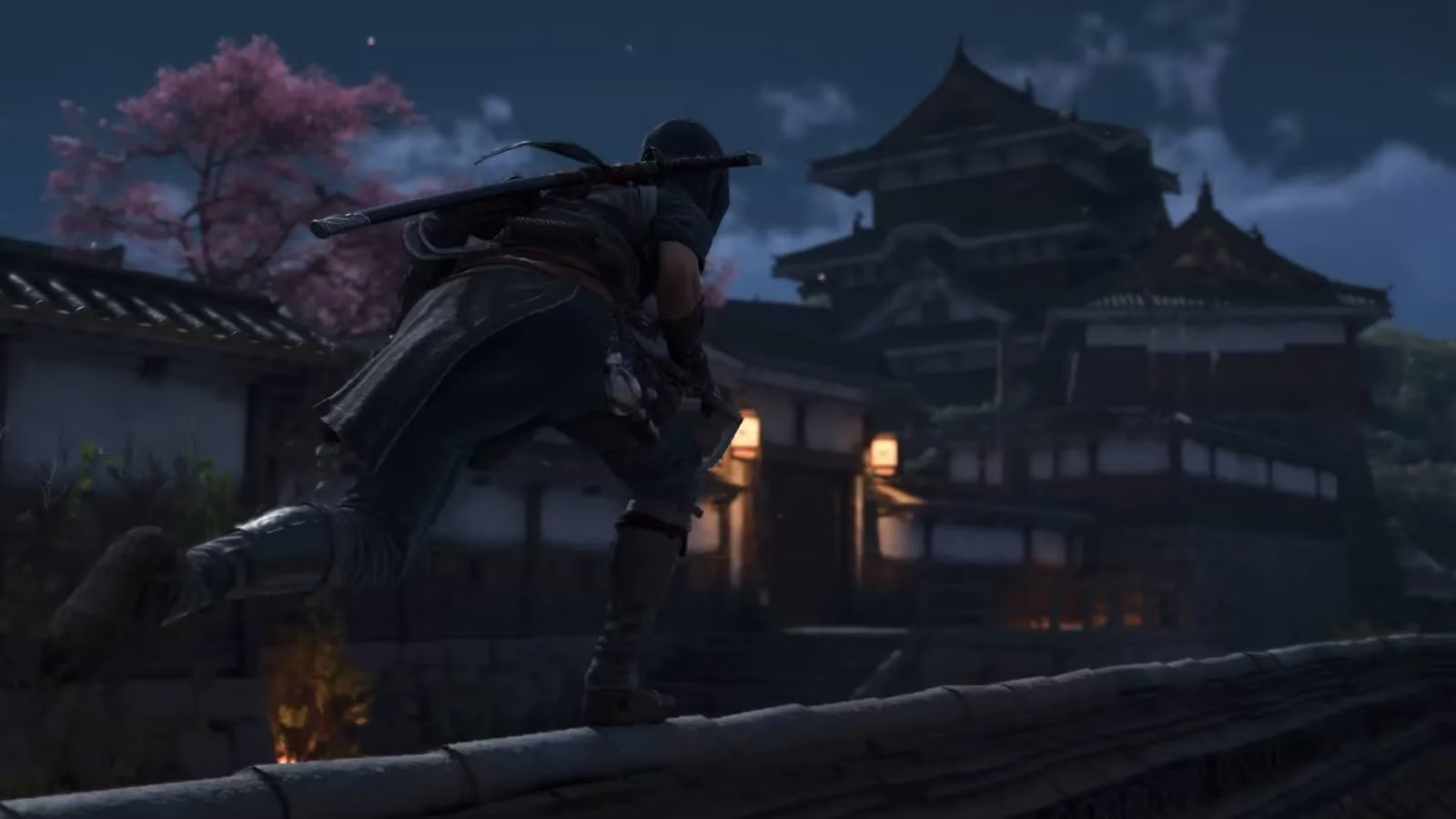
Guillemot was pretty clear about the reasoning. He said, "After a review of our pipeline, we have decided to provide additional development time to some of our biggest productions in order to create the best conditions for success." He straight-up admitted that the "really strong quality" of Assassin's Creed Shadows after its delay was a huge factor in making this call. It's like they finally learned that rushing a game out the door just isn't worth it if it's not ready. Quality over speed, right? The result? He promised that FY2026-27 and FY2027-28 will be packed with "significant content coming from our largest brands." So, get ready for some big years ahead, even if we have to wait a little longer.
Now, the million-dollar question is: which games are getting the delay treatment? Guillemot didn't name names, but he used the phrase "largest brands," which is basically Ubisoft-speak for their heavy hitters. We're talking about franchises that have defined the studio for years. Let's break down the usual suspects:
-
Assassin's Creed: This one's a no-brainer. We know Ubisoft has a whole bunch of AC projects cooking. The mysterious Assassin's Creed Hexe and the long-rumored Black Flag remake are prime candidates for a bit more time in the oven.
-
Far Cry: After the last installment, you can bet the team is looking to make a big splash with the next one.
-
The Division: The looter-shooter franchise has a dedicated fanbase waiting for the next chapter.
-
Rainbow Six: Besides the main tactical shooter, there's even talk of a turn-based Rainbow Six game in development. That could definitely use some extra polish.
-
Ghost Recon: Spec Ops fans are always eager for the next deployment.
And let's not forget the other elephants in the room:
| Title | Status | Why it Might Be Delayed |
|---|---|---|
| Splinter Cell Remake | In Development | Reviving a legendary stealth series demands perfection. |
| Beyond Good & Evil 2 | Perpetually Delayed | At this point, its development is its own legend. |
Honestly, looking at that list... it's a lot. And that's probably the point. Ubisoft isn't just delaying one or two games; they're rethinking their entire approach to releasing their flagship titles. It feels like a conscious move away from the annualized churn towards a model where each release is a major, polished event. For a player like me, that's actually pretty exciting, even if it means more waiting. I'd much rather get an amazing game later than a mediocre one sooner.
So, what does this mean for the immediate future, like the rest of 2025? Well, Guillemot's announcement kinda implies that things might get a little quiet on the Ubisoft front. With the big guns being saved for 2026 and beyond, 2025 could be a year for smaller projects, updates to live-service games, or maybe just... breathing room. It's a strategic pause, a moment for the studio to regroup and refocus after a turbulent period. Sometimes, you gotta take a step back to leap forward, you know?
Thinking about it from my perspective as a fan, this whole situation is fascinating. Ubisoft took a hard look at what worked (Assassin's Creed Shadows) and what didn't (their recent commercial struggles), and they're making a bold, patient bet on quality. It's a lesson learned the hard way, but it seems like the right one. The silence before the storm, I guess. When those delayed games finally do hit in 2026 and 2027, the expectation will be sky-high. They'll need to deliver experiences that justify the wait and prove that this new, more cautious strategy was the right path all along. Here's hoping the extra time in development pays off for them—and for us players waiting on the other side.